

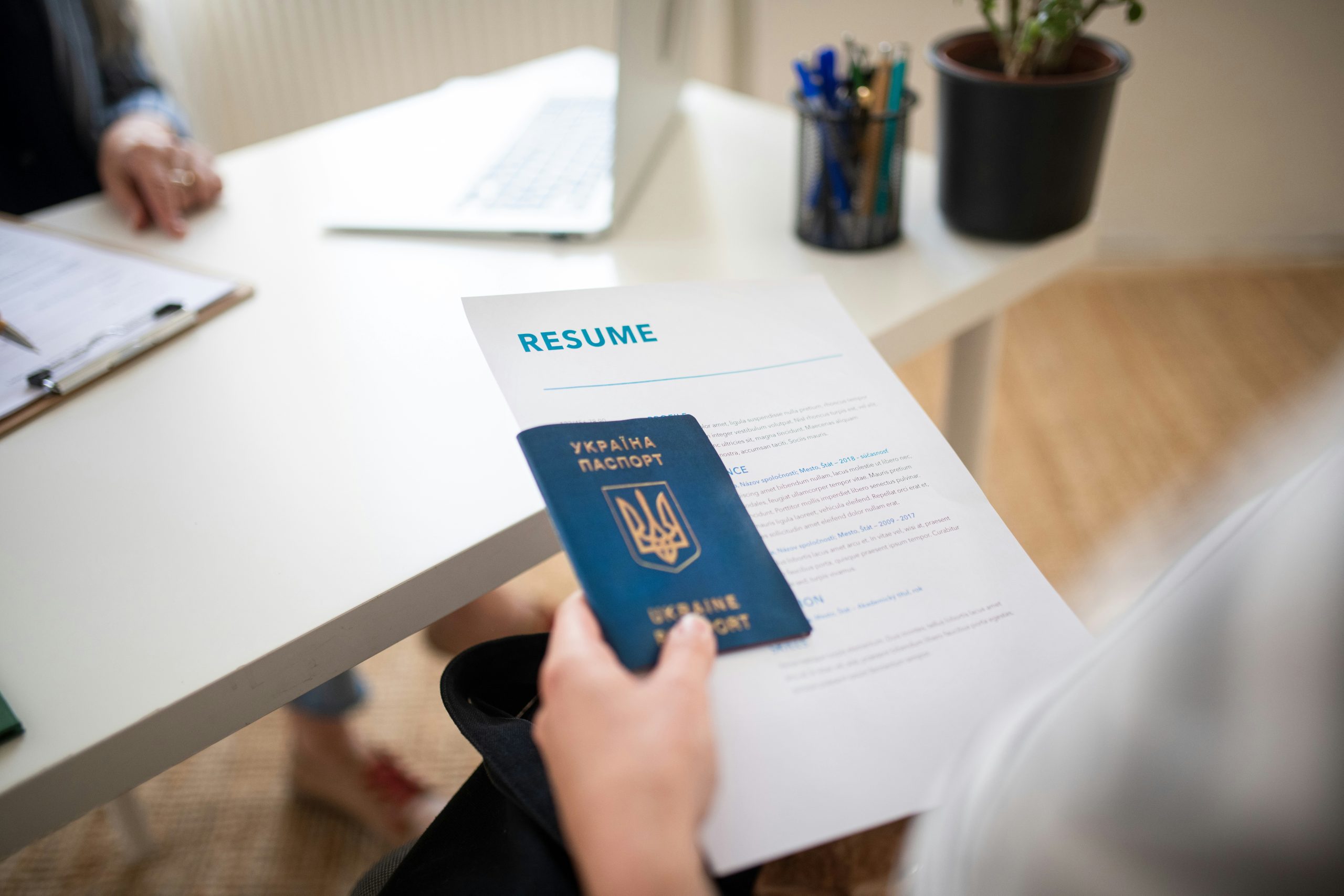


The U.S. Citizenship and Immigration Services (USCIS) announced on July 17 that it had received enough petitions to reach both the H-1B cap and the advanced degree exemption for the fiscal year of 2027.
The H-1B visa has long been the main and most common temporary work visa used by highly skilled professionals entering the U.S.
This news comes as talent shortages are starting to bite across various highly skilled industries in the US; experts warn that the US could soon face a record shortage of workers in the tech, healthcare, education and construction sectors.
The Georgetown Centre predicts that, by 2032, 18.4 million experienced and educated workers will have exited the job market, while only 13.8 million younger workers with the equivalent qualifications will replace them.
Facing such dramatic shortages, many U.S.-based companies will have to look outward to ensure a continued flow of talent and continued competitiveness. But the saturation of the H-1B program means that this option is unlikely to be viable for most employers.
Danielle Goldman, CEO and Co-founder of Build Talent Labs, an organization that helps American companies hire and retain global talent, is keenly aware of this issue.
In conversation with The Sociable, Goldman said that “employers … filed more than twice as many H-1B applications as there were visas available. The demand for international talent hasn’t gone anywhere, particularly in the high tech sectors that keep the US competitive globally”.
However, Goldman also clarified that alternatives exist for outward-looking U.S. employers: “companies need to know the lottery isn’t their only option.”
“Most companies I speak to believe the H-1B lottery is the only route available to them, so when they lose it, they assume they’ve lost the hire. In reality, there’s a whole set of legal pathways that don’t get discussed, and the cost of not knowing about them is losing your best talent to a competitor who does.”
Limitations and opportunities of the H-1B Visa
The H-1B program has been the subject of major controversy during the second Trump administration. The H-1B, an employer-sponsored visa which permits U.S. companies to hire foreign professionals in specialty jobs on a temporary basis, is largely opposed by Trump’s nationalistic MAGA base.
Until this year, the USCIS used a random lottery to choose who would receive the visa.
This changed last December, when the Trump administration announced that it would introduce a “wage-weighted” lottery, a selection system for H-1B visas that prioritizes higher-salaried workers.
This new system allows higher earners more entries into the lottery and replaces the previous randomized lottery, which gave all previous applicants to the scheme an equal mathematical chance of selection.

The H-1B program is capped at 85,000 visas issued a year; there is a 65,000 regular cap and an additional 20,000 reserved for individuals with a U.S. master’s degree or higher.
Exemptions to the cap exist. Certain institutions, like universities, hospitals and research institutes are exempt from the annual H-1B visa lottery. That means that when these organizations hire a foreign national, they automatically qualify for a H-1B visa.
Goldman’s Build Talent Labs helps companies in the private sector to take advantage of this rule. Through the Build Fellowship, Goldman’s Build Talent Labs sets the private sector companies’ foreign hires up with part-time teaching roles at American universities in high-demand skill areas (AI, data, finance, biochemistry etc).
“Companies in the private sector can fully legally take advantage of this route when the individual they hire also works part-time at a cap-exempt institute”, Goldman explained.
“Since they qualify for cap-exempt H-1B through their university teaching role, the visa also extends to cover their full-time role at the private company. So the company is able to retain an employee without having to be subject to the H-1B lottery and the uncertainty associated with that”, the founder continued.
The exemptions notwithstanding, if the H-1B route is an unviable option for an employer seeking to attract international talent because of oversubscription or the prioritization of higher wage earners, other options remain.
The L-1 Visa
The L-1 visa applies to intracompany transferees moving from a foreign office to a U.S. branch. The visa is split into L-1A for managers and executives and an L-1B for specialized knowledge workers. Recipients of the visa must have worked abroad for the company for at least one continuous of the three years prior to the application.
The main benefits of the L-1 program are twofold. Unlike the H-1B visa, there is no annual cap or lottery system limiting the number of L visas issued. Also, unlike O-1 visas, there is also no need to prove a track record of extraordinary achievement in order to qualify.
This visa program is gaining traction; 77,249 total issuances were reported for the L-1 visa in FY2025, which marked a 7.6% increase compared to FY2024.
In September last year, Republican Senator for Iowa Chuck Grassley and Democrat Senator for Illinois Dick Durbin reintroduced a bipartisan H-1B and L-1 visa reform bill that, if enacted, would apply a more restrictive definition to the term “specialized knowledge” and introduce a minimum wage requirement for an L-1 applicant. The bill has not yet passed the Senate.
The O-1 Visa
The O-1 visa program provides non-US citizens deemed to possess extraordinary abilities in fields like the sciences, education, business, art or film.
To qualify, an applicant must satisfy at least three of eight criteria, which include receiving internationally or nationally recognized prizes in one’s specific field, having media coverage in well-known industry-specific publications, having a high salary in relation to others in similar professions and writing scholarly articles in professional journals.
The State Department issued 20,015 O-1 visas in FY 2025, compared to 19,457 O-1 visas in FY 2024. However, as of May 2026 USCIS processing times for O-1 visa holders stand at 12 months, compared to 7.5 months in December 2025.
The Trump administration has not significantly reformed the O-1 process and, given this program’s emphasis on the applicant’s ability to bring extraordinary talent to the U.S., it is likely the most insulated from anti-immigration reforms.
Others (H-2, P, EB, O-2, J-1)
Other visa programs include the EB (employment based) visa, which lets non-U.S. workers obtain a green card to work in the U.S. permanently. However, the Trump administration has introduced country-specific screening to the Green Card program and ruled that most temporary visa holders must return to their home country to apply for a Green Card in the U.S.
The J-1 visa is a non-immigrant visa issued to research scholars, students and interns participating in cultural exchange programs. The visa often applies to those seeking to gain business or medical training in the U.S. Applicants usually have to reside in their home country for two years after the visa expires.
Approximately 300,000 people come to the U.S. on J-1 visas annually, although the Trump administration has been issuing fewer J-1 visas to international students.
The P visa applies to internationally acclaimed athletes, entertainers and artists, granting them a temporary, non-immigrant work permit. The P visa has been left largely unchanged by the Trump administration.
O-2 visas are granted to the essential support staff of O-1 visa holders, meaning the former’s application depends on the latter’s.
The H-2 program is a temporary visa that allows American employers to hire workers in agriculture (H-2A) or industries like construction, hospitality, recreation and landscaping (H-2B). The visas are issued for seasonal or peak-time work.
The Trump administration has cut wages for H-2A workers and increased English language requirements for H-2B workers.
Disclosure: This article mentions a client of an Espacio portfolio company.