



Wingsure, a New York company that came out of the California research institute SRI, launched a new platform for the coffee-growing industry on September 28, through which growers can document what’s happening on their farms with their own phones so that buyers, insurers and lenders can work with the same verified information.
The company designed Wingsure COFFEA with a familiar headache in mind. A single farm might get a visit from a certifier, then a buyer checking sustainability claims, and later from an insurer or bank, each gathered around its own data and format.
Wingsure says that leaves growers doing the same work over and over, while companies end up with partial pictures of the farm that age quickly.
COFFEA tries to fix that by keeping one record per farm and adding to it every season. Evidence is captured and verified on site, then stored in a way that can be reused across different programs – meaning a company looking at sourcing and another looking at risk, for example, aren’t starting from zero each time.
“A farm cannot be understood through a periodic form, a declaration or a satellite image alone,” Avi Basu, Wingsure’s founder and CEO, said in the announcement. “It is a living system.”
The firm timed the launch to two coffee industry gatherings in Switzerland last week: the Global Coffee Platform marked its 10th anniversary in Geneva on September 30, and the Swiss Coffee Trade Association held its annual forum in Montreux on October 1 and 2.
Coffee’s small-farm problem
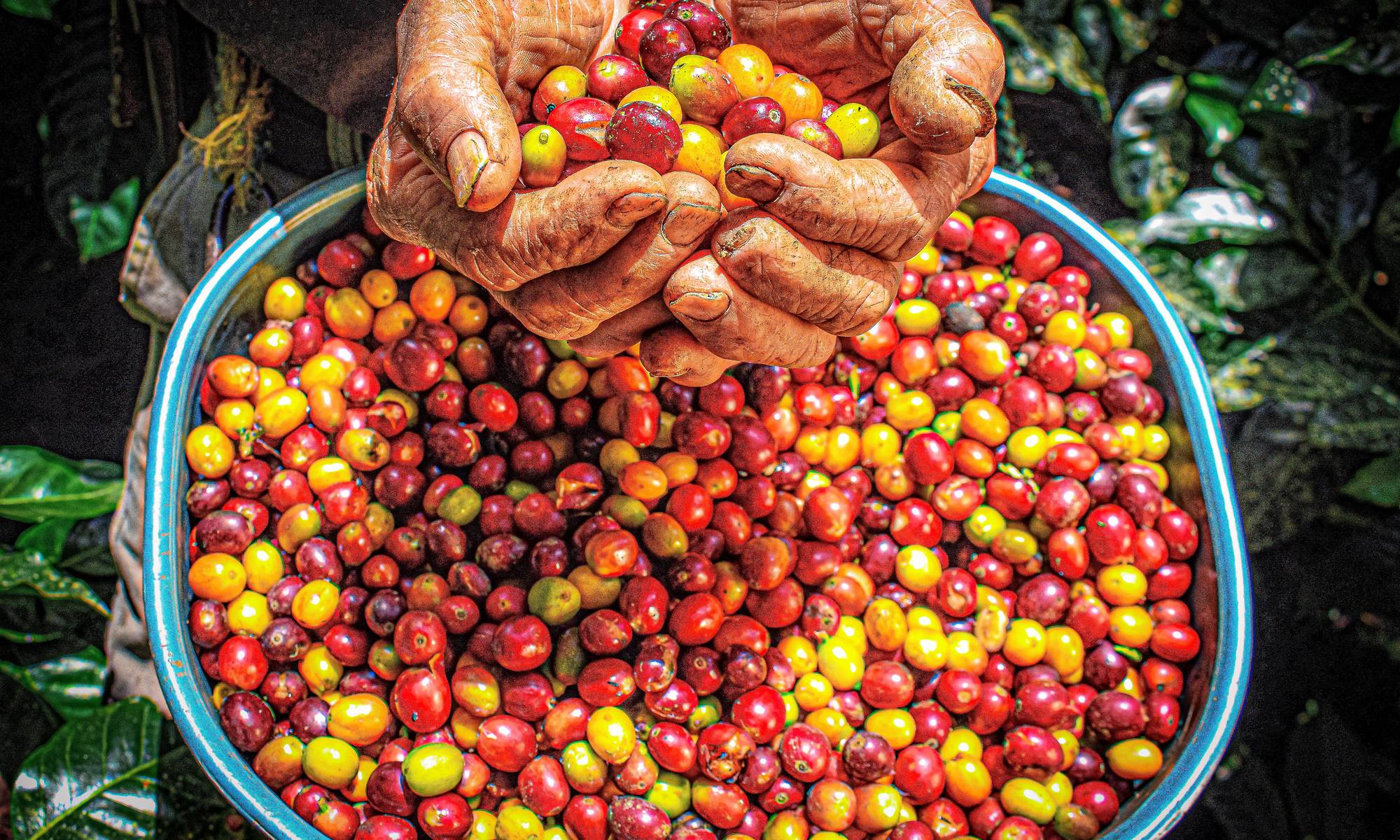
Large estates produce surprisingly little of the world’s coffee. Most of it, in fact, is grown on around 12.5 million farms spread across over 50 countries, according to Fairtrade, and about 95% of those farms cover less than five hectares. Together, these small farms account for about three-quarters of global production.
Collecting good data is thus expensive and slow, while the demand for it is going up. The EU Deforestation Regulation, for one, takes effect for large and medium-sized companies on December 30, after EU institutions agreed last December to delay it for a second time.
Coffee is on the list of covered commodities, meaning companies selling it in the EU will need to prove due diligence that it wasn’t grown on land cleared of forest after 2020. Products that can’t be traced that way won’t be allowed on the market at all, which imported 2.9 million tonnes of coffee from non-EU countries last year – representing €18.7 billion ($20.9 billion USD).
Wingsure points to climate risk and productivity as other reasons the industry needs better information from the farm level; businesses are increasingly relying on that kind of data for sourcing, understanding quality and making investment decisions, as well as meeting traceability rules.
What growers to in the app
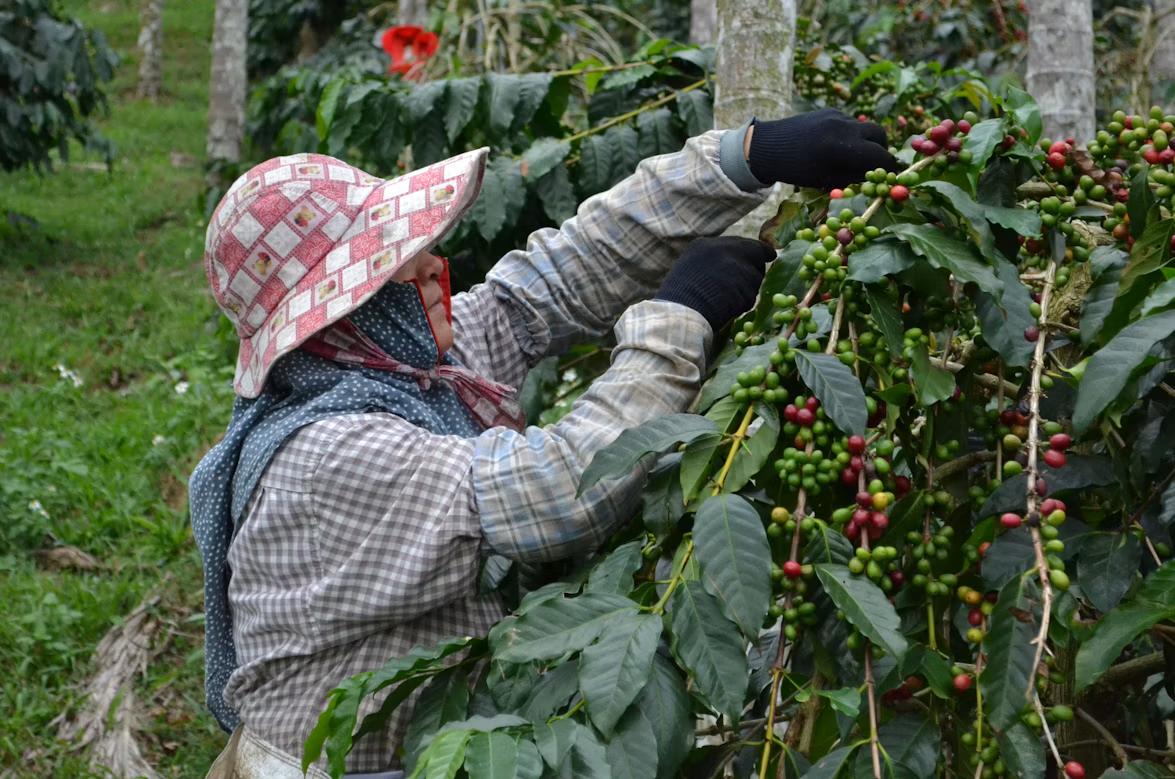
In practice, the grower opens the app and follows on-screen augmented-reality guides that show what to photograph and record. They can also speak their observations aloud in several languages.
Wingsure’s software then uses computer vision, geospatial analysis and machine learning to turn those inputs into records with a time and place attached. Importantly, none of the system needs connection at the moment of capture, as the app works offline, and satellite or drone images can be added to the record afterwards.
Dr. Bikram Sengupta, the company’s co-founder and CTO, said traceability is built into how the system reaches its conclusions.
“AI is only as credible as the evidence beneath it,” he said. “Our architecture keeps every insight connected to what was captured, where and when. That allows verification, inference and prediction to become part of one traceable intelligence system.”
Wingsure says COFFEA is designed to feed into the sustainability, traceability, carbon and risk systems coffee companies already run, not to replace them.
Growers, however, get something out of it, too. The record they build can be used to show their practices and how their farm has improved, and to get more relevant advice. In programs that participate, it could also help them qualify for incentives, insurance or credit.
“For the grower, that means a farm record that becomes more valuable with every season,” Basu added.
Interest from Colombia to India
Wingsure has been around since 2018, and was formally spun out of SRI in 2021, when it was offering AI-based crop insurance to small farmers in India. It has since used the same technology for crop health monitoring, loss assessment and verifying regenerative farming practices across several crops.
In coffee, the company said it’s now working on yield forecasting and other coffee science applications, with offices in Kolkata, Bogota, and Kuala Lumpur, as well as New York.
The Colombian Coffee Growers Federation (FNC), for one, represents more than half a million coffee-growing families and owns the internationally acclaimed Juan Valdez brand. Its technical manager, Alvaro Gaitan, said the federation is talking with Wingsure about whether the technology could complement what the FNC already does for growers.
“As a grower-led institution, FNC is focused on building the next generation of capabilities Colombian coffee producers will need to compete globally,” Gaitán said. “Better, more timely farm intelligence is central to that vision.”
Meanwhile, Madhukar Sinha, who leads government and rural business at Tata AIG General Insurance, the Indian joint venture between the Tata Group and AIG, said scaling up agricultural insurance requires a much clearer view of what’s going on at the farm.
“Wingsure’s approach is compelling because it connects verified field evidence with the intelligence needed for risk assessment and decision-making,” Sinha said.
A farm record that keeps developing, he added, “can be valuable not only for insurance, but across the broader agricultural ecosystem.”
Featured image: via Wingsure
Disclosure: This article mentions a client of an Espacio portfolio company.