Arsenic microbes
NASA scientists have discovered a second genesis of life on earth, the US space agency announced today.
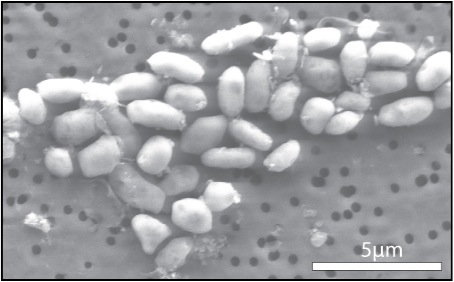
While researching in chemical rich environment of Mono Lake, Calafornia, NASA scientists have discovered microogranisms that can survive and reproduce using the highly toxic chemical arsenic. The newly discovered microbes, named GFAJ-1, can breath the chemical, which is lethal to most organisms on earth. NASA reports that the chemical also forms part of the organisms’ DNA and RNA.
NASA said that the discovery has “changed the fundamental knowledge about what comprises all known life on Earth.” They believe that GFAJ-1 could provide new insights into man’s understanding of biology, evolution, history, chemistry and astrology.
Ed Weiler, NASA’s associate administrator for the Science Mission Directorate said,
“The definition of life has just expanded. As we pursue our efforts to seek signs of life in the solar system, we have to think more broadly, more diversely and consider life as we do not know it.”
NASA video of the discovery
The discovery opens the possibility that a greater number of planets and environments can harbour life in the galaxy.
The research is published in this week’s edition of Science Express.
Horasis, the international think thank founded by Frank-Jürgen Richter, has announced that its Asia Meeting…
While the use of AI in the classroom is always a hotly debated topic, the…
Anthropic built a moat around its most powerful AI model yet. When tested, the defenses…
The 50-in-5 Awards are a made-up spectacle to celebrate globalist lapdogs corralling all of society…
I spent weeks debugging an agent that kept “forgetting” contexts mid-task. The agent had access…
Most people assume network problems during a disaster are about scale. Too many calls. Too…
View Comments