



In April, Stanford’s Institute for Human-Centered AI published its ninth AI Index, and one figure in its 423 pages explains much of this year.
On Terminal-Bench, a test of whether AI agents can finish real tasks on a computer, success rates rose from 20% this past year to 77.3% in 2026.
GenAI also reached 53% of the population within three years, faster than the PC or the internet did.
Companies are moving more slowly than the models. McKinsey’s latest State of AI survey found that 62% of organizations are at least experimenting with AI agents, yet in any single business function no more than 10% are scaling them.
Gartner expects 40% of enterprise applications to include task-specific agents by the end of this year, up from under 5% in 2025.
The distance between those numbers is where most technology leaders now spend their week. They decide which agents can be trusted with a customer call, a supermarket shelf, a patient record or an ad deal, and which stay in pilot. Stanford’s own count of documented AI incidents rose to 362 in 2025, from 233 the year before, so the cost of a wrong call is going up as well.
The 20 leaders below were picked for what they are deploying in 2026. They include an investor who builds companies from scratch in Miami and Gurgaon, a practising attorney whose own law firm’s phones are answered by software he co-founded, a drone company founder rethinking who works on the outside of tall buildings, and the first AI chiefs at McDonald’s and Fetch. Here’s the list.

Anjli Jain, Managing Partner, ElevenX Capital
Jain is the Managing Partner of ElevenX Capital, which is a fund and venture studio that builds and supports companies from inception, with studios in Miami and Gurgaon, India. She’s long been looked to as a thought leadership in particular in voice AI.
She chairs BlackBeltHelp, one of her portfolio companies, and in April of last year ElevenX portfolio company OculusIT was acquired by Avathon Capital. Her model pairs capital with in-house engineering, sales and finance teams, a structure that gets more valuable as AI startups multiply.
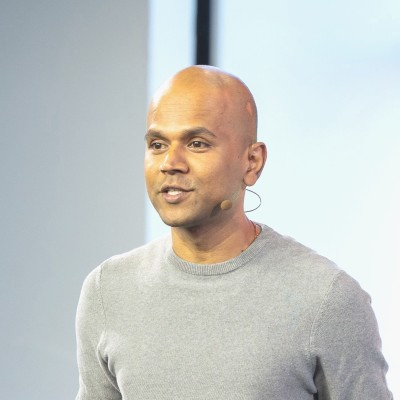
Guna Jayaraman, Chief AI Officer, Cornerstone OnDemand
Jayaraman joined the Santa Monica workforce software company as Chief AI Officer in September 2025, saying organisations can no longer afford to experiment at the edges. He spent 13 years at Amazon, finishing as vice president of software development for HR, enterprise and generative AI systems used by millions of employees.
His early work on conversational AI in customer service influenced AWS launches including Connect, Comprehend and Translate. Before Amazon he worked as an engineer at Palm, HP and Cisco, and he holds a master’s in electrical engineering from the University of Kansas.
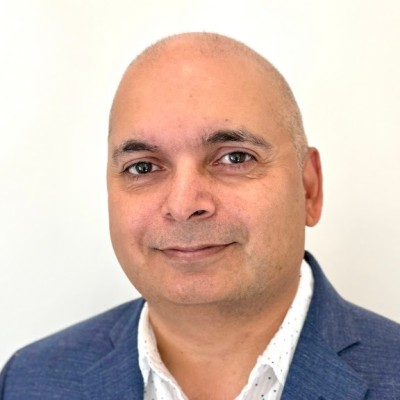
Shashi Upadhyay, President of Product, Engineering and AI, Zendesk
Upadhyay runs product management, engineering, AI, design and trust and security at Zendesk, the San Francisco customer service software company. He joined from Google, where he led the advertiser product portfolio, including Google Ads, Google Analytics and Performance Max.
Before Google he founded Lattice Engines, which Dun & Bradstreet acquired in 2019. His goal at Zendesk is to lead the market in AI for service, and the company has since added an AI-powered enterprise search platform, Unleash, to extend that push into employee service.

Manuela Gutiérrez, Product Manager, 360 Health Data
Gutierrez helps to lead the 360 Health Data, one of the healthtech AI companies making a big impact in Latin America. The Colombian startup launched its platform in July of last year to bring fragmented medical records in Latin America into one place. Access to secure, current and reliable medical data remains one of the region’s hardest problems, with patient information scattered across insurers, clinics and hospital systems.
360 Health Data’s bet is that centralizing that information improves both clinical and administrative decisions, and that a product built for Colombian conditions can scale across the region.
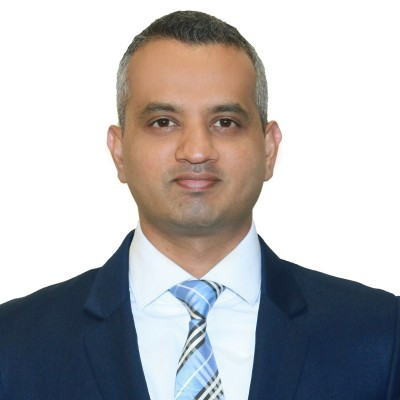
Sandeep Sharma, Chief AI Officer, Ness Digital Engineering
Sharma joined Ness in July 2026 with more than 20 years of experience. At KKR he led the Digital Value Creation practice across India and Southeast Asia within KKR Capstone Asia, and before that he was an associate partner at McKinsey. He holds an MBA from IIM Ahmedabad.
Ness Digital Engineering is a global provider of intelligent data and software engineering services, specializing in data, AI, and cloud-powered solutions that drive innovation and deliver measurable business outcomes

Julian Ahrends, Chief Technology Officer, ADvendio
ADvendio, based in Hamburg with offices in London, New York, Toronto and Dublin, runs a Salesforce-built revenue system for publishers, broadcasters and retail media networks. In June 2026 it launched a team of specialised AI agents for ad operations, and it has joined AgenticAdvertising.org, the industry group working on standards for agent-to-agent ad buying. In a July ExchangeWire column, Ahrends argued that ad sales are heading past AI assistance toward fully agentic workflows. His position is that those agents need an execution layer that understands the maths of media: inventory, pricing and delivery.

Ruslan Okhrimovych, CEO, effie.ai
Ruslan Okhrimovych is the CEO of effie.ai, the first agentic retail execution platform built for consumer goods brands, retailers, and distributors who need what’s agreed at headquarters to actually happen on the shelf. Rather than treating store data as something to review after the fact, effie pairs field teams with AI agents in a real-time closed loop: the agents pull together store-level requirements, read the context of each location, build a tailored plan for every visit, walk reps through execution step by step, verify that tasks were completed, and report results straight from the shelf back to HQ.
The platform combines these agents with AI image recognition, AI-ready data, and merchandising, sales, and analytics tools.

Christopher Uthe, President, BlackBeltHelp
BlackBeltHelp runs AI help desks for more than 130 US colleges and universities, aiming to improve student support while cutting what campuses spend on it. In December 2025 Uthe expanded the executive team, hiring Shekhar Gulati as CTO to lead platform modernisation and product engineering, alongside a new operations leader who previously served as COO of Ruffalo Noel Levitz. Uthe has been making the case to universities for hybrid support, where AI handles routine questions and people take the rest. He hosted a public session that month on how AI is producing measurable value in higher education.

Bob Reisenweber, COO, Source Meridian
Source Meridian was founded in Medellín in 2016 by Mike Hoey, who had helped grow ESPS from 10 people to 220 before it went public. The firm has become one of Colombia’s larger software houses by staying narrow: data pipelines, BI and medical vocabulary management for US life-sciences clients. All of it runs under SOC 2 and HIPAA rules, which makes every AI tool the team adopts a compliance question as well as an engineering one.
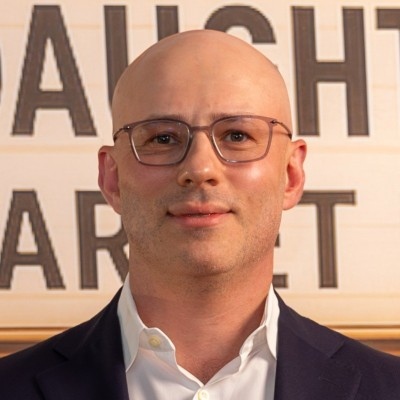
Gene Sigalov, Co-founder and CEO, Upfirst.ai
Sigalov founded SimpleTexting in 2010 and bootstrapped it to $20 million in annual recurring revenue and 17,000 customers, then sold it for nine figures without ever taking outside investment. He is also a practising attorney, and Upfirst started with a problem he saw at his own firm: missed calls at the front desk.
Upfirst’s AI receptionist now answers those phones and passed 1,000 small-business clients in its first year with no ad spend. He is applying the same playbook a second time, betting that small firms will adopt AI faster when it fixes one daily problem.
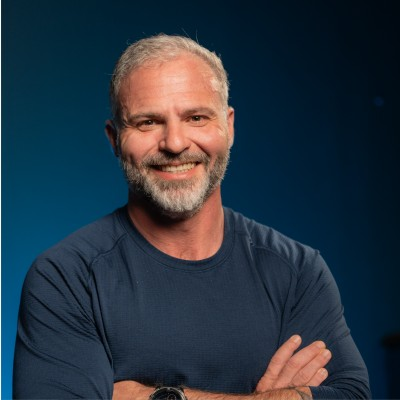
Vic Pellicano, Founder and CEO, SkyPSI
Pellicano is the founder of SkyPSI, which pairs drones with AI to automate parts of commercial facade cleaning, a job that has long meant workers hanging from ropes or platforms on tall buildings. The company sells the contract and the result, delivered by certified independent operators, rather than selling drones to clients.
Pellicano frames the business as a labour question: for generations, working people traded their bodies for a wage, and robotics can take some of that physical risk away. The same month SkyPSI launched, a Singapore company announced its own robotic facade service, a sign the niche is becoming a category.
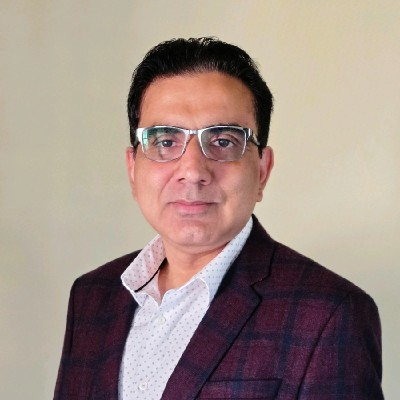
Manu Swami, Chief Technology Officer, Sonata Software
Swami became CTO of Sonata Software in April last year, helping to guide the company’s shift to an AI-first organisation. He has more than 25 years in technology leadership across financial services, telecom, media, healthcare, manufacturing and retail.
Prior to Sonata he led healthcare and life sciences consulting and technology at Virtusa, and earlier worked on large programmes at Tata Consultancy Services.

Kirsten Moorefield, Co-founder, Cloverleaf
Moorefield never planned to start a tech company. She and her co-founders began working on Cloverleaf at Cincinnati’s Rhinegeist Brewery in 2015, were rejected by an accelerator, and spent the following year interviewing potential customers instead. The result is an automated coaching platform that helps employees understand how their colleagues work and communicate, now used by some of the world’s largest brands.
She has given a TEDx talk on diversity of thought, wrote Thrive: A Collaboration Manifesto, and hosts the podcast People Are Complicated.
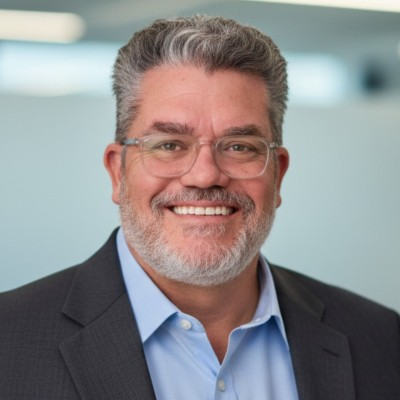
Steve Daly, Chief Technology Officer, Gorilla Logic
Daly was announced this month as the new CTO of Gorilla Logic, which was founded in 2002 by and is headquartered in Colorado. The company has delivery centers in Colombia and Costa Rica. When it went looking for a CTO, it asked for a hands-on executive who would sit in client conversations and treat AI as a delivery accelerator.
The role sits where strategy, sales and delivery meet, and it carries a mandate to scale AI-assisted engineering across every team.The company set up an advisory board in May 2025 specifically to guide its AI services.

Mohamed Maan, Chief Technology Officer, Chromatics AI
Chromatics AI builds and manages open-weight physical AI systems for real-world industrial sites. It pulls together data from machine vision cameras, robots, IoT sensors and the machines themselves, then uses it to automate processes, improve safety and raise efficiency in production. Its clients work in manufacturing, energy, healthcare and ports, where an AI model shares the floor with heavy equipment and the people operating it. Choosing open-weight models gives those clients more control over what runs on their own sites, and Maan is responsible for making that architecture reliable at industrial scale.
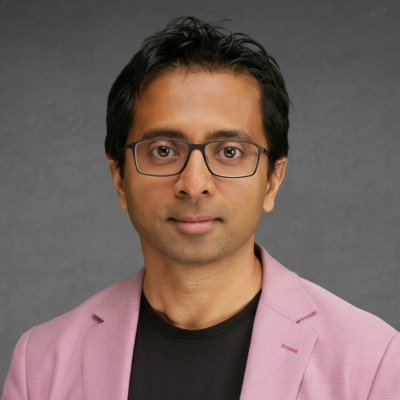
Rajat Mishra, Co-founder and CEO, Prezent Vivo
Mishra is the CEO of Prezent Vivo, which is fusing AI and human expertise to power Life Sciences communications. Prior to this, Mishra was a senior vice president at Cisco with profit-and-loss responsibility for its $14 billion customer experience business and a team of more than 1,000 people. He also held senior roles at McKinsey, Microsoft and Mu Sigma, and holds three patents in AI and software automation. The Software Report named him one of its Top 25 AI Executives of 2025.

Nate MacLeitch, Founder and CEO, QuickBlox
MacLeitch began his career as a trade representative for the State of California in London, then ran sales at WIN plc, later bought by Cisco, and served as COO of Twistbox Entertainment, now part of Digital Turbine. He founded and sold a mobile content business before starting QuickBlox. Its chat, video and AI communication tools can be deployed inside a customer’s own hosting environment, which matters to regulated buyers such as telehealth providers. He compares AI’s effect on digital communication to the arrival of the PC or the internet. He studied at UC Davis and the London School of Economics.
Paul Gu, Co-founder and CEO, Upstart
Gu co-founded Upstart in 2012 with Dave Girouard and Anna Counselman, and on 1 May 2026 he moved from CTO to CEO of the AI lending marketplace in Burlingame, California. Girouard joked that Gu was barely old enough to drink when they started. Upstart connects consumers to more than 100 banks and credit unions that use its AI models, and more than 90% of its loans are fully automated. Gu has argued that most of the interest borrowers pay is unnecessary once credit is priced by AI, and he told Fortune he thinks AI can make every American 10% richer.
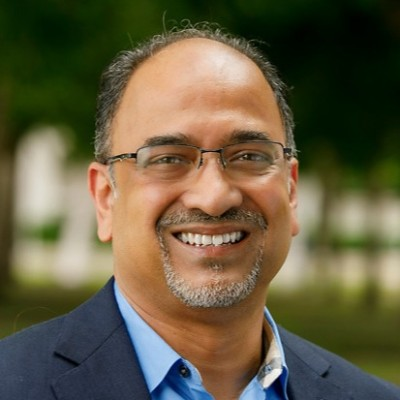
Das Dasgupta, Global Chief Data Analytics and AI Officer, McDonald’s
Dasgupta is the first person to hold this role at McDonald’s, which created it in September 2025 to run data, analytics and AI across the company. He came from Starbucks, where as chief data and analytics officer he led a team of more than 250 people, and earlier held senior roles at Amazon, Publicis Groupe and Viacom. He has said his first priority is building “Moneyball” teams that deliver early wins in restaurants and in the app. He holds dual PhDs from Penn State and teaches analytics as an adjunct professor at USC Marshall School of Business.
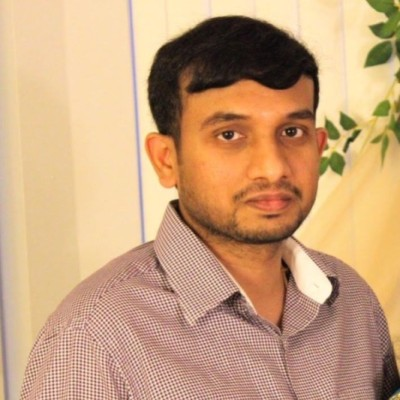
Gowtham Gundu, Chief AI Officer, Fetch
Gundu became the first Chief AI Officer at Fetch, the Madison, Wisconsin rewards app, in June 2025. He spent more than 18 years at Google, most recently as director of engineering for Ads Content Safety, and pioneered the use of large language models within Google Ads. At Fetch he is layering machine learning into ad personalisation, product discovery and the receipt scanning that powers the app. The same month he joined, Fetch paused operations companywide for its first AI Week to build fluency across every team, and he now speaks publicly about raising engineering speed without losing quality or trust.

Disclosure: This article mentions clients of an Espacio portfolio company.