



In April, Stanford’s Institute for Human-Centered AI published its ninth AI Index, and one figure in its 423 pages explains much of this year.
On Terminal-Bench, a test of whether AI agents can finish real tasks on a computer, success rates rose from 20% this past year to 77.3% in 2026.
GenAI also reached 53% of the population within three years, faster than the PC or the internet did.
Companies, however, are moving more slowly than the models. McKinsey’s latest State of AI survey found that 62% of organizations are at least experimenting with AI agents, yet in any single business function no more than 10% are scaling them. Further, Gartner expects 40% of enterprise applications to include task-specific agents by the end of this year, up from under 5% in 2025.
The distance between those numbers is where most technology leaders now spend their week. They decide which AI agents can be trusted with a customer call, a supermarket shelf, a patient record or an ad deal, and which stay in pilot.
Stanford’s own count of documented AI incidents rose to 362 in 2025, from 233 the year before, so the cost of a wrong call is going up as well.
The 20 leaders below were picked for how they are advancing the field of AI in 2026. They include an investor who builds companies from scratch in Miami and Gurgaon, a practicing attorney whose own law firm’s phones are answered by software he co-founded, a drone company founder rethinking who works on the outside of tall buildings, and the first AI chiefs at McDonald’s and Fetch. Here’s the list.

Anjli Jain, Managing Partner, ElevenX Capital
Anjli Jain is the Managing Partner of ElevenX Capital, which is a venture studio that builds and supports companies from inception. According to the company, “At ElevenX, we invest in technology that elevates human capability, not replaces it. Because progress isn’t measured by automation – It’s measured by how much stronger, smarter, and healthier people become.”
Jain has long been looked to as a thought leader in technology, and in particular in voice AI. She also chairs BlackBeltHelp, one of her portfolio companies. Her venture studio provides support to its portfolio companies via IT services, sales and finance teams, and more, in addition to providing a structure that gets more valuable as its AI startups multiply.
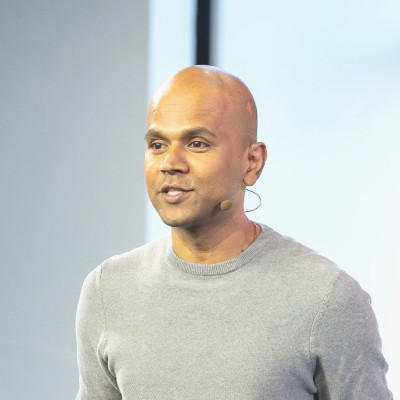
Guna Jayaraman, Chief AI Officer, Cornerstone OnDemand
Jayaraman joined the Santa Monica workforce software company as Chief AI Officer in September 2025, saying organisations can no longer afford to experiment at the edges. He spent 13 years at Amazon, finishing as vice president of software development for HR, enterprise and generative AI systems used by millions of employees.
His early work on conversational AI in customer service influenced AWS launches including Connect, Comprehend and Translate. Before Amazon he worked as an engineer at Palm, HP and Cisco, and he holds a master’s in electrical engineering from the University of Kansas.

Gowtham Gundu, Chief AI Officer, Fetch
Gundu became the first Chief AI Officer at Fetch, the Madison, Wisconsin rewards app, in June 2025. He spent more than 18 years at Google, most recently as director of engineering for Ads Content Safety, and pioneered the use of large language models within Google Ads. At Fetch he is layering machine learning into ad personalisation, product discovery and the receipt scanning that powers the app.
The same month he joined, Fetch paused operations companywide for its first AI Week to build fluency across every team, and he now speaks publicly about raising engineering speed without losing quality or trust.

Shashi Upadhyay, President of Product, Engineering and AI, Zendesk
Upadhyay runs product management, engineering, AI, design and trust and security at Zendesk, the San Francisco customer service software company. He joined from Google, where he led the advertiser product portfolio, including Google Ads, Google Analytics and Performance Max.
Before Google he founded Lattice Engines, which Dun & Bradstreet acquired in 2019. His goal at Zendesk is to lead the market in AI for service, and the company has since added an AI-powered enterprise search platform, Unleash, to extend that push into employee service.

Sandeep Sharma, Chief AI Officer, Ness Digital Engineering
Sandeep Sharma joined Ness Digital Engineering in July of this year with more than 20 years of experience. Prior to joining he was a Director at KKR, and before that he was an associate partner at McKinsey. He holds an MBA from IIM Ahmedabad.
Ness Digital Engineering is a global provider of intelligent data and software engineering services, specializing in data, AI, and cloud-powered solutions that drive innovation and deliver measurable business outcomes.
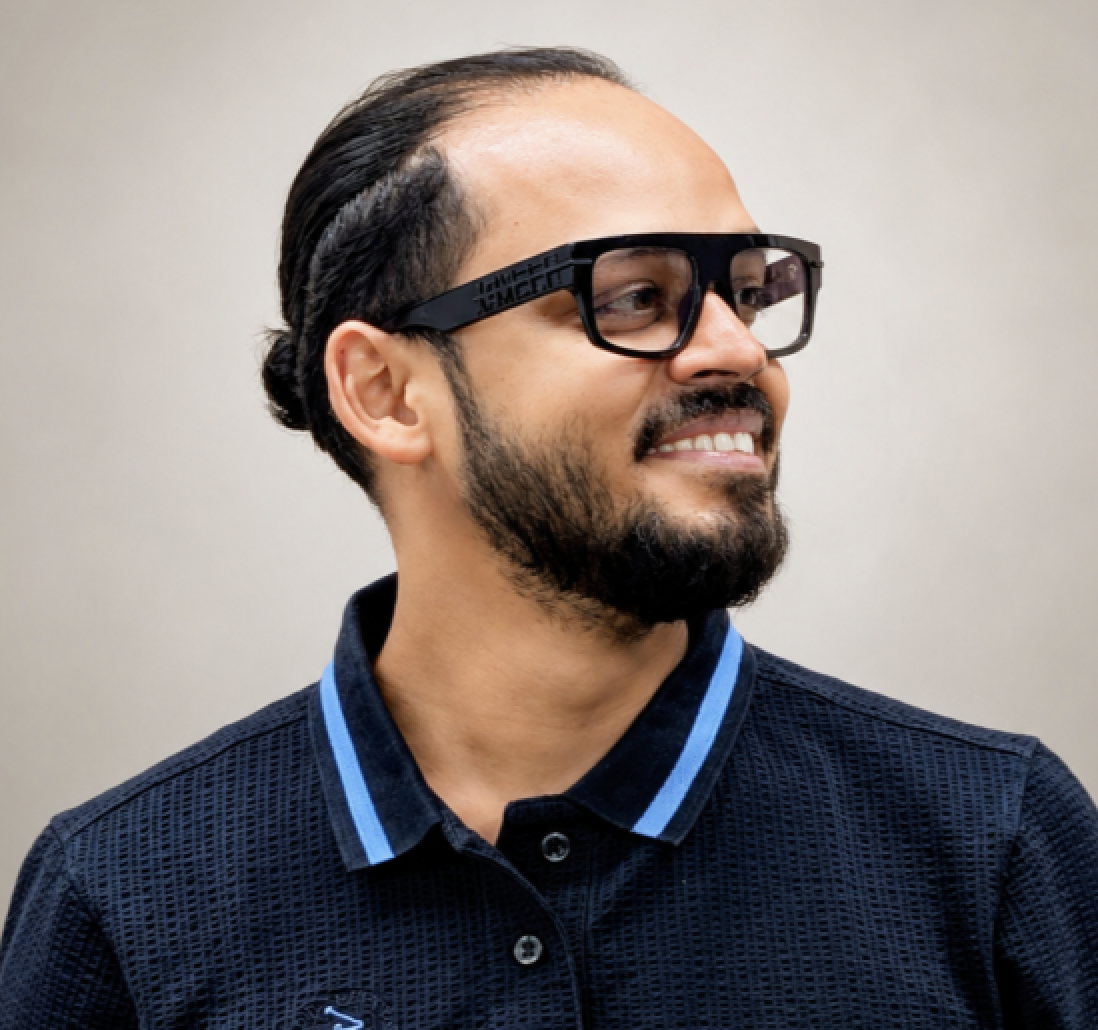
Shashank Agrawal, Founder and CEO, StarApps Studio
Shashank Agrawal is the Founder and CEO of StarApps Studio, a bootstrapped SaaS company that builds merchandising tools for brands on Shopify, which is increasingly giving merchants access to advanced AI tools. StarApps today powers more than 30,000 businesses, including thousands of Shopify Plus stores and brands such as Levi’s, Merrell, Havaianas and Jack & Jones.
StarApps Studio recently added AI to SA Variants Pro to keep large product catalogs organized automatically, and the company has grown to $7 million in annual recurring revenue without outside funding. A third-generation entrepreneur, Agrawal previously built FreshMonk, a print-on-demand business in India that reached $2 million in revenue and served more than 100,000 customers.
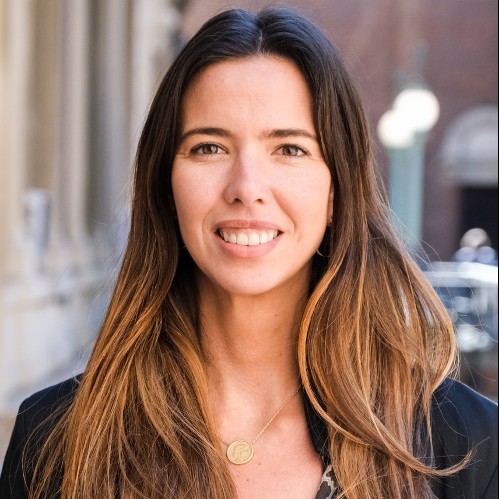
Alexandra Olle, Co-CEO, Kognia Labs
Alexandra Ollé is the Co-CEO of Kognia Labs, which turns the latest advances in AI into cognitive agents delivered as a service (AaaS). The company’s agents are designed to evolve as fast as the businesses using them.
Her path to AI runs through healthcare and real estate. She was earlier Director of Healthcare Investment at JLL in Barcelona and an investment analyst at Azora Exan in Miami. Earlier she worked in business development at QIDA, a Spanish home-care company, where she saw up close how technology can stretch scarce care resources further. She holds an Masters Degree from Columbia University in New York.

Julian Ahrends, Chief Technology Officer, ADvendio
ADvendio, founded by Bernd Bube, runs a Salesforce-built revenue system for publishers, broadcasters and retail media networks. In June 2026 it launched a team of specialized AI agents for ad operations, and it has joined AgenticAdvertising.org, the industry group working on standards for agent-to-agent ad buying. The company’s CTO is Julian Ahrends.
In a July ExchangeWire column, Ahrends argued that ad sales are heading past AI assistance toward fully agentic workflows. His position is that those agents need an execution layer that understands the maths of media: inventory, pricing and delivery.

Ruslan Okhrimovych, CEO, effie.ai
Ruslan Okhrimovych is the CEO of effie.ai, the first agentic execution platform built for retail. At his company, rather than treating store data as something to review after the fact, the company’s platform pairs field teams with AI agents in a real-time closed loop: the agents pull together store-level requirements, read the context of each location, build a tailored plan for every visit, walk reps through execution step by step, verify that tasks were completed, and report results straight from the shelf back to HQ.
Ruslan is also a Mentor at The Founder Institute, the world’s largest startup accelerator.

Bob Reisenweber, COO, Source Meridian
Bob Reisenweber is the COO of Source Meridian, which was founded in 2016 by Mike Hoey, who had helped grow ESPS from 10 people to 220 before it went public. The firm has become one of Colombia’s larger software houses by staying narrow: data pipelines, BI and medical vocabulary management for US life-sciences clients.
All of it runs under SOC 2 and HIPAA rules, which makes every AI tool the team adopts a compliance question as well as an engineering one.
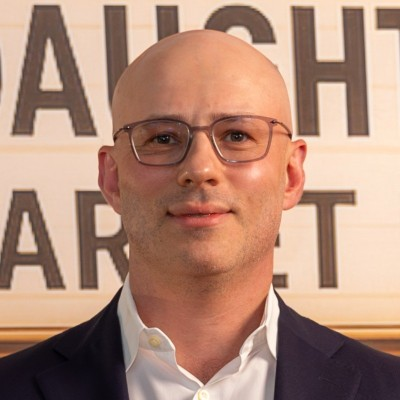
Gene Sigalov, Co-founder and CEO, Upfirst.ai
Gene Sigalov founded SimpleTexting in 2010 and bootstrapped it to millions in revenue, then sold it without ever taking outside investment. He is also an attorney, and Upfirst started with a problem he saw at his own firm: missed calls at the front desk.
Upfirst’s AI receptionist now answers those phones and is considered by many to be the leading player in the space. He is applying the same playbook a second time, betting that small firms will adopt AI faster when it fixes a big daily problem.
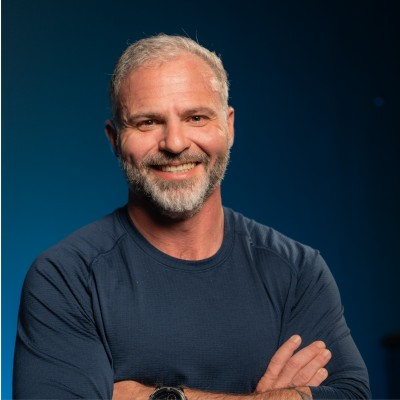
Vic Pellicano, Founder and CEO, SkyPSI
Vic Pellicano is the founder of SkyPSI, which pairs drones with AI to automate parts of commercial facade cleaning, a job that has long meant workers hanging from ropes or platforms on tall buildings. The company sells the contract and the result, delivered by certified independent operators, rather than selling drones to clients.
Pellicano frames the business as a labour question: for generations, working people traded their bodies for a wage, and robotics can take some of that physical risk away. He has quickly become one of the entrepreneurs in the AI and drone industries to watch.
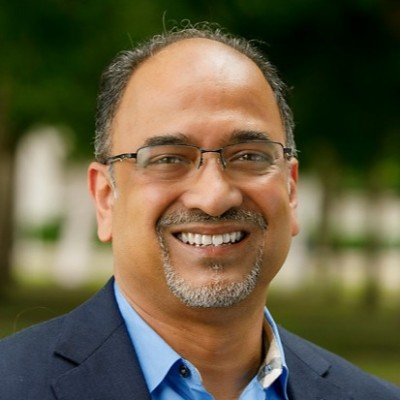
Das Dasgupta, Global Chief Data Analytics and AI Officer, McDonald’s
Dasgupta is the first person to hold this role at McDonald’s, which created it in September 2025 to run data, analytics and AI across the company. He came from Starbucks, where as chief data and analytics officer he led a team of more than 250 people, and earlier held senior roles at Amazon, Publicis Groupe and Viacom.
He has said his first priority is building “Moneyball” teams that deliver early wins in restaurants and in the app. He holds dual PhDs from Penn State and teaches analytics as an adjunct professor at USC Marshall School of Business.
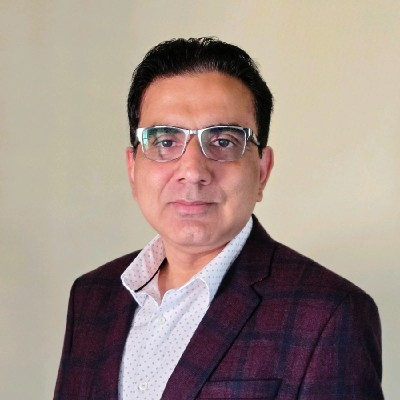
Manu Swami, Chief Technology Officer, Sonata Software
Manu Swami became CTO of Sonata Software in April last year, helping to guide the company’s shift to an AI-first organisation. He has more than 25 years in technology leadership across financial services, telecom, media, healthcare, manufacturing and retail. This past week Sonata announced it had earned the 2026–2027 Microsoft AI Business Solutions Inner Circle award. This marks Sonata Software’s sixth Inner Circle recognition, placing the company among the top echelon of Microsoft’s AI Business Solutions global network of partners.
Prior to Sonata he led healthcare and life sciences consulting and technology at Virtusa, and earlier worked on large programmes at Tata Consultancy Services.

Kirsten Moorefield, Co-founder, Cloverleaf
Kirsten Moorefield is the Co-Founder of Cloverleaf and the Head of Research at Cloverleaf Labs. Moorefield never planned to start a tech company. She and her co-founders began working on Cloverleaf at Cincinnati’s Rhinegeist Brewery in 2015, were rejected by an accelerator, and spent the following year interviewing potential customers instead. The result is an automated coaching platform that helps employees understand how their colleagues work and communicate, now used by some of the world’s largest brands.
She has given a TEDx talk on diversity of thought, wrote Thrive: A Collaboration Manifesto, and hosts the podcast People Are Complicated.
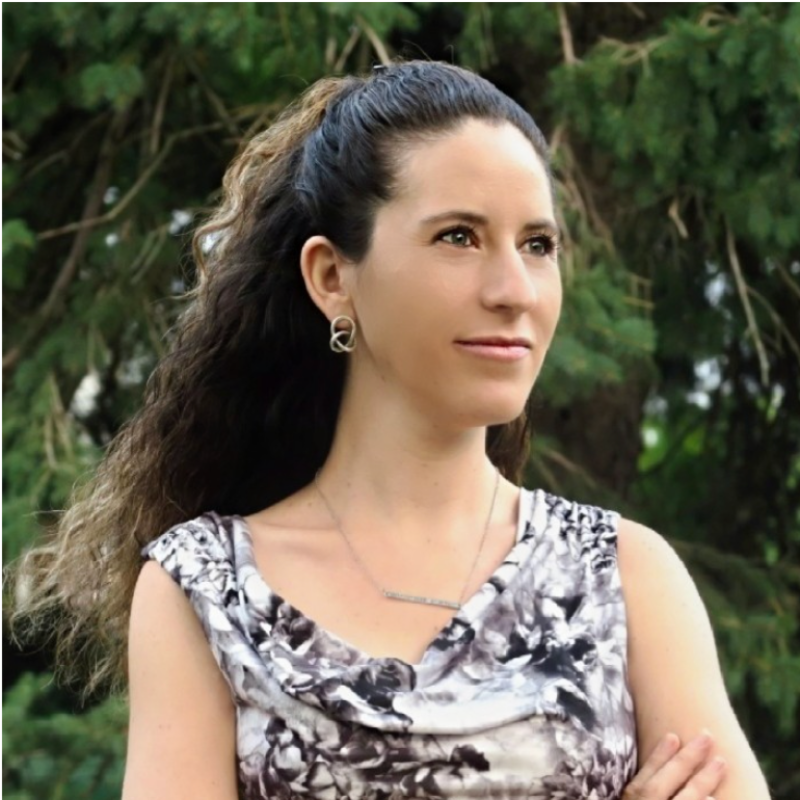
Constanza Gómez Mont, Founder and CEO of C Minds
Constanza Gómez Mont is the Founder and CEO of C Minds, an AI ethics strategist, and social entrepreneur focused on advancing responsible technology and innovation for people and the planet. With more than 20 years of experience in the development field, Constanza works at the intersection of emerging technology, public policy, innovation, and sustainability. Her work focuses on connecting technology with social and environmental challenges, particularly across Latin America and other emerging economies. She is also a leading voice on the role of technology in biodiversity conservation and regeneration, including through NaturaTech LAC.
Throughout her career, she has worked with governments, multilateral institutions, and global organizations on emerging technology strategies, AI governance, and ethical frameworks. Constanza has led high-level global processes, including UNESCO’s first global AI ethics instrument, adopted by 193 countries, and chaired the World Economic Forum’s AI for Humanity Council. She advises governments, multilaterals and technology companies, and was named a 2024 Yale Climate Fellow. In 2024, she was recognized by Forbes México and NTT DATA as one of Mexico’s AI leaders.
Rick Folgmann, COO, Get Covered
As COO of Get Covered, Rick Folgmann helps run an AI risk platform for property management that brings insurance and other operational risk workflows into one system, with an AI layer of 16 agents covering renters insurance, vendor compliance, reviews, pets, deposits and spend management. When it comes to advancing the multifamily industry, there’s arguably no AI company making as big of an impact.
In 2026 the company went further. It acquired Revyse in June, adding vendor compliance, contract management, spend intelligence and AI-powered automation to its insurance compliance platform, and the combined platform now covers millions of rental units in the U.S. While many insurtechs are still trying to move from AI experiments to production, Folgmann is scaling AI across one of the most regulated and paperwork-heavy corners of real estate.

Manuela Gutiérrez, Product Manager, 360 Health Data
Gutierrez helps to lead the 360 Health Data, one of the healthtech AI companies making a big impact in Latin America. The Colombian startup launched its platform in July of last year to bring fragmented medical records in Latin America into one place. Access to secure, current and reliable medical data remains one of the region’s hardest problems, with patient information scattered across insurers, clinics and hospital systems.
360 Health Data’s bet is that centralizing that information improves both clinical and administrative decisions, and that a product built for Colombian conditions can scale across the region.

David Brenner, CTO, Altorney
David Brenner is the CTO of Altorney and has long been one of the most respected voices in the legaltech industry. With nearly 30 years in information technology, Brenner is an executive, developer and innovator in eDiscovery and legal technology. He has worked in Microsoft’s tech stack since the 1990s and was an early adopter of its SQL Server database platform.
For the past 15 years, he has built and managed software systems that move the industry forward and help teams perform at their best. Known for creating revenue-generating platforms, leading high-performing teams and improving operational efficiency, David is a driving force in legal technology.
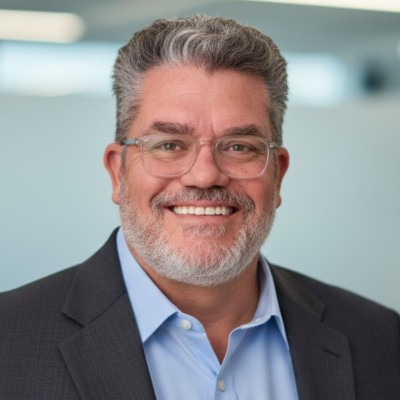
Steve Daly, Chief Technology Officer, Gorilla Logic
Steve Daly was announced this month as the new CTO of Gorilla Logic, which was founded in 2002 by and is headquartered in Colorado. The company has delivery centers in Colombia and Costa Rica. According to the company’s CEO Drew Naukam, “AI is changing what companies can build and how quickly they can build it, but enterprise adoption requires much more than access to a model. Steve adds the leadership and experience to help us connect those capabilities to the complex systems, data and engineering realities of the enterprise.”
Daly brings more than 35 years of technology and consulting leadership to Gorilla Logic. Most recently, he served as Senior Vice President of Solutions, Global Digital Transformation at New Era Technology, where he led the company’s Global AI Practice and directed strategic initiatives spanning AI, cloud transformation, and enterprise innovation.

Mohamed Maan, Chief Technology Officer, Chromatics AI
Maan is the CTO of Chromatics AI, which builds and manages open-weight physical AI systems for real-world industrial sites. It pulls together data from machine vision cameras, robots, IoT sensors and the machines themselves, then uses it to automate processes, improve safety and raise efficiency in production.
Its clients work in manufacturing, energy, healthcare and ports, where an AI model shares the floor with heavy equipment and the people operating it. Choosing open-weight models gives those clients more control over what runs on their own sites, and Maan is responsible for making that architecture reliable at industrial scale.

Deepti Juturu, Co-founder and Chief Customer Officer, Prezent Vivo
Deepti Juturu is the Co-Founder and Chief Customer Officer of Prezent Vivo, which is fusing AI and human expertise to power Life Sciences communications. She is also the Co-Founder and Chairman of the Mobion Foundation.
Prior to Prezent Vivo and founding Prezentium, which was acquired in 2025, she had worked at McKinsey and at Genentech. Juturu received her MBA from the Wharton School of Business, considered by many to be the #1 business school in the world.

Nate MacLeitch, Founder and CEO, QuickBlox
Nate MacLeitch, CEO of QuickBlox, which is adding AI to real-time communications. According to the Founder, “In the early 2010s, smartphones changed expectations, but embedded communication inside apps was still fragmented, expensive, and hard to control. I teamed up with experienced engineers to build SDKs and APIs for chat, voice/video, file sharing, and notifications—designed to be flexible, secure, and developer-friendly. That work became QuickBlox, where I’ve been CEO since 2018. My focus has been on building the company for the long term: strong engineering and operations, a modular product strategy, and close alignment with real customer needs.”
His company’s chat, video and AI communication tools are in particular very well regarded in the industry due to its white-label telehealth solution. MacLeitch studied at UC Davis and the London School of Economics.

Paul Gu, Co-founder and CEO, Upstart
Gu co-founded Upstart in 2012 with Dave Girouard and Anna Counselman, and on 1 May 2026 he moved from CTO to CEO of the AI lending marketplace in Burlingame, California. Girouard joked that Gu was barely old enough to drink when they started.
Upstart connects consumers to more than 100 banks and credit unions that use its AI models, and more than 90% of its loans are fully automated. Gu has argued that most of the interest borrowers pay is unnecessary once credit is priced by AI, and he told Fortune he thinks AI can make every American 10% richer.

Disclosure: This article mentions clients of an Espacio portfolio company.