


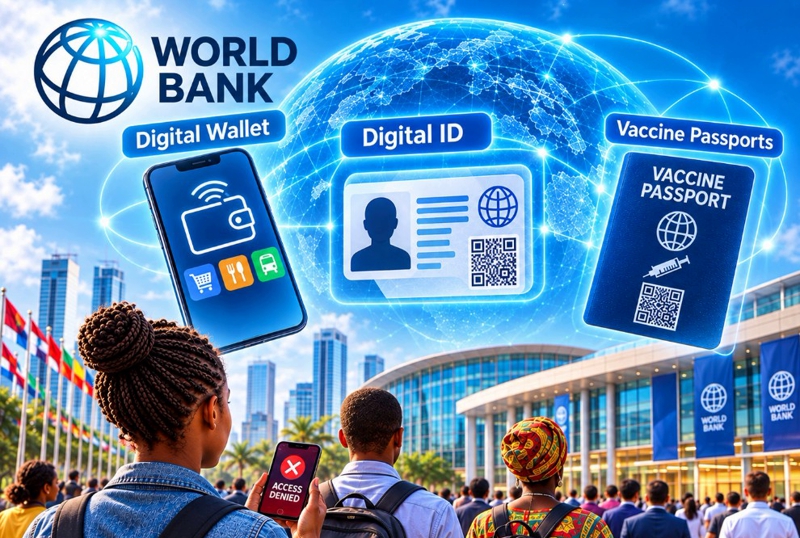


The digital wallet is another link in the chain of digital ID-related schemes, from vaccine passports to internet passports; from carbon footprint tracking to social credit scoring: perspective
The World Bank and digital ID advocacy group Identification for Development (ID4D) launch their “Digital Wallets Implementation” guidebook for governments to follow.
Digital ID is the foundation on which digital wallets stand, and they are all part of a broader Digital Public Infrastructure (DPI).
DPI is a civic technology stack consisting of three main pillars: digital identity, fast programmable payments systems, and massive data sharing between public and private entities.
According to the guidebook, “Digital wallets have emerged as a powerful model for secure, user-centric digital identity and credential exchange.”
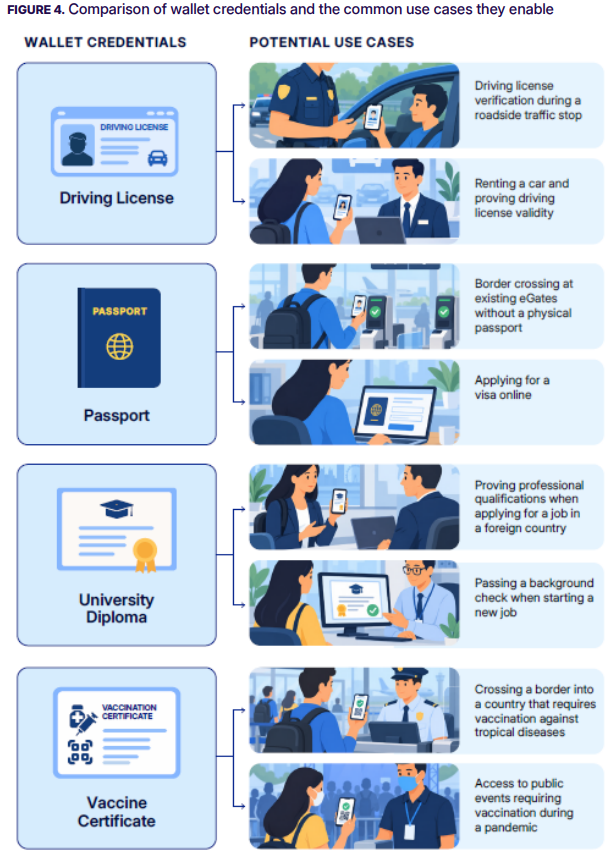
Among the many use cases for digital wallets, the World Bank highlights “vaccine certificates,” aka vaccine passports, for “Access to public events requiring vaccination during a pandemic.”
“Digital wallets represent a fundamental shift in how governments deliver trusted credentials to citizens—not as a new application layered on top of existing systems, but as a new paradigm for identity and data sharing altogether”
World Bank, Digital Wallets Implementation, November 2026
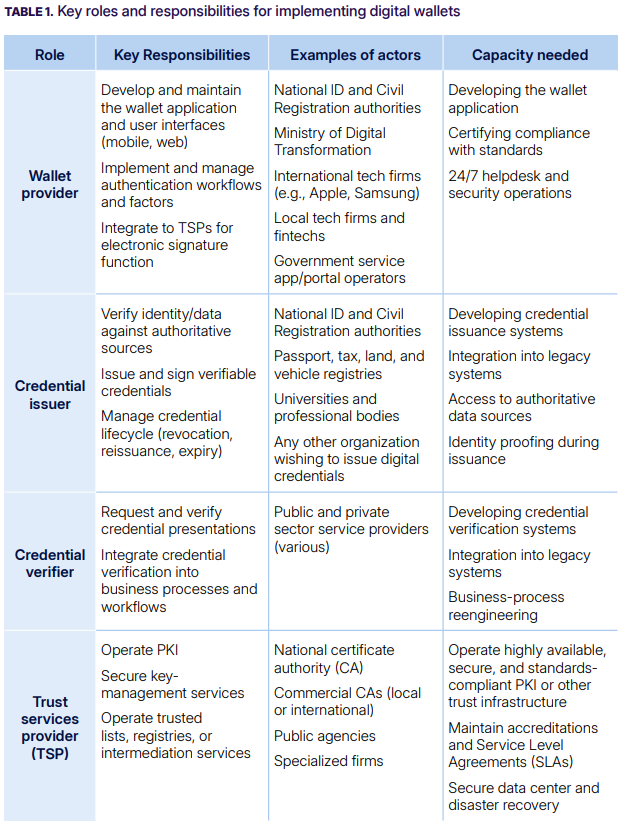
“The transition from monolithic digital ID systems to wallet-based ecosystems is as much institutional as it is technical. It requires a shift from end-to-end system ownership toward orchestrating an ecosystem of actors—credential issuers, verifiers, wallet providers, and trust service providers—operating under a shared trust framework”
World Bank, Digital Wallets Implementation, November 2026
The credentials to be housed in these digital wallets envisioned by the unelected world bankers are almost identical to digital identity schemes dreamed up by the World Economic Forum (WEF) and its partners.
According to the World Bank and ID4D guidebook, “the potential range of such credentials is, in principle, limitless.”
For example, credentials in a digital wallet may include:
- National identity authorities (birth certificates and or ID cards),
- Universities and vocational schools (proof of educational or professional qualifications),
- Financial institutions (proof of financial account ownership),
- Commercial registries (proof of business ownership or directorship),
- Medical professionals (prescriptions or test results),
- Transit operators (travel tickets),
- Private businesses (proof of employment or role-based access to company IT systems)
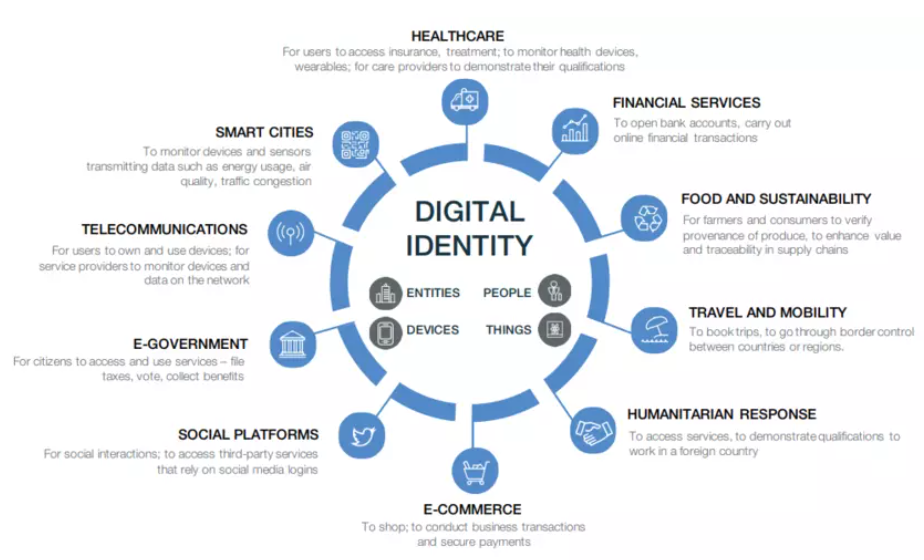
Now, compare that with the digital identity graphic that the WEF published eight years ago.
“This digital identity determines what products, services and information we can access – or, conversely, what is closed off to us”
WEF, Identity in a Digital World: A new chapter in the social contract, September 2018
“This paper provides practical guidance for governments seeking to implement digital wallets as part of a broader digital identity and credential ecosystem”
World Bank, Digital Wallets Implementation, November 2026
The World Bank proposes an “ecosystem-based model” as opposed to a system-based one:
“The ecosystem-based model gives governments flexibility in how they design, source, and govern the components of a digital identity system. Benefiting from this flexibility also requires a shift in implementation mindset, away from ‘building a system’ and toward ‘enabling an ecosystem.'”
Five key principles underpin this approach:
- Anchor design in real use cases:
- Wallet ecosystems grounded in clearly defined, high-value use cases are more likely to succeed than those driven primarily by supply-side ambitions. Given the distributed nature of implementation, use cases that tackle concrete problems and involve committed issuers and verifiers are more likely to gain traction.
- Design the ecosystem before determining how to build it:
- A digital wallet is not merely a smartphone app. Before jumping to procurement, governments should first map the full ecosystem—components, actors, and relationships—and scope out the enabling trust framework before making decisions about what to build in-house, procure, regulate, or leave to the market.
- Adopt open standards early:
- Even where interoperability is a longer-term objective, early adoption of international standards can reduce costs, support iterative development, and mitigate vendor lock-in risks. Over time, a system based on open standards leaves the door open to cross-border interoperability.
- Procure outcomes, not systems:
- Large, monolithic IT procurements tend to underperform. In the context of digital wallets, procurements should be scoped around ecosystem outcomes—including policy development, piloting, change management, and capacity building—while allowing enough modularity to accommodate the fast-paced and iterative nature of ecosystem development.
- Align financing with function:
- Sustainable financing models are critical for long-term success of a wallet ecosystem. While revenue generation may be possible for certain use cases, not all components can or should be self-sustaining. Public financing may remain necessary where no viable commercial model exists or where monetization would undermine other strategic objectives such as adoption, privacy, inclusion, or trust.
“Authentication against trusted identity documents, such as a national ID card, is typically required to verify the holder’s identity before a wallet is provisioned or a credential is issued”
World Bank, Digital Wallets Implementation, November 2026
Everything is built upon digital ID.
The guidebook encourages government rollouts of national IDs, but for a country like the US, which holds the largest share and voting power in the World Bank and doesn’t have a federally-mandated national ID system, the paper suggests that “mobile driving licenses” standards could be applied to digital wallets:
“Rapid standards development has been driven by several factors, including the push for mobile driving licenses in countries such as the United States and Australia, as well as implementation of the EUDI Regulation and EUDI Wallets in the European Union.”
“National ID schemes must implement robust processes for managing credential lifecycle events, including the revocation of legal identity documents such as ID cards and passports, and the subsequent updating of credential revocation lists.”
World Bank, Digital Wallets Implementation, November 2026
“Existing DPI platforms, such as national legal ID systems, can significantly enhance wallet ecosystems by providing high-assurance onboarding and trusted credential issuance. Established data-sharing platforms can facilitate identity verification and validation processes for credential issuers”
World Bank, Digital Wallets Implementation, November 2026
Digital wallets, digital ID, digital payments, digital public infrastructure — all must be interoperable with other providers, verifiers, and users via public-private-partnerships — the fusion of corporation and state.
According to the guidebook, “In many cases, a requirement will emerge for interoperability among various wallet components. For example, credentials may need to be portable across different wallets, or verifiers may need to verify credentials issued by multiple issuers.”
The digital control grid must be interconnected.
The digital ID agenda is continuously being expanded into almost all aspects of life, and it takes on many forms.
The digital wallet is another link in the chain of digital ID-related schemes, from vaccine passports to internet passports; from carbon footprint tracking to social credit scoring.
Image source: AI generated with ChatGPT