



At its annual R&D Forum in Tokyo, Japan’s largest telecom confirmed an idea that they are working on that would have most people scratching their heads. The way to keep AI running is to use more light, though not in the traditional way one would think. For decades, saving energy has meant using less light, whether that’s switching off lamps or dimming screens.
According to NTT’s research, light moves data with less power than electricity does. An important finding, as AI’s appetite for power continues to be a collective problem the world is trying to solve, and fast.
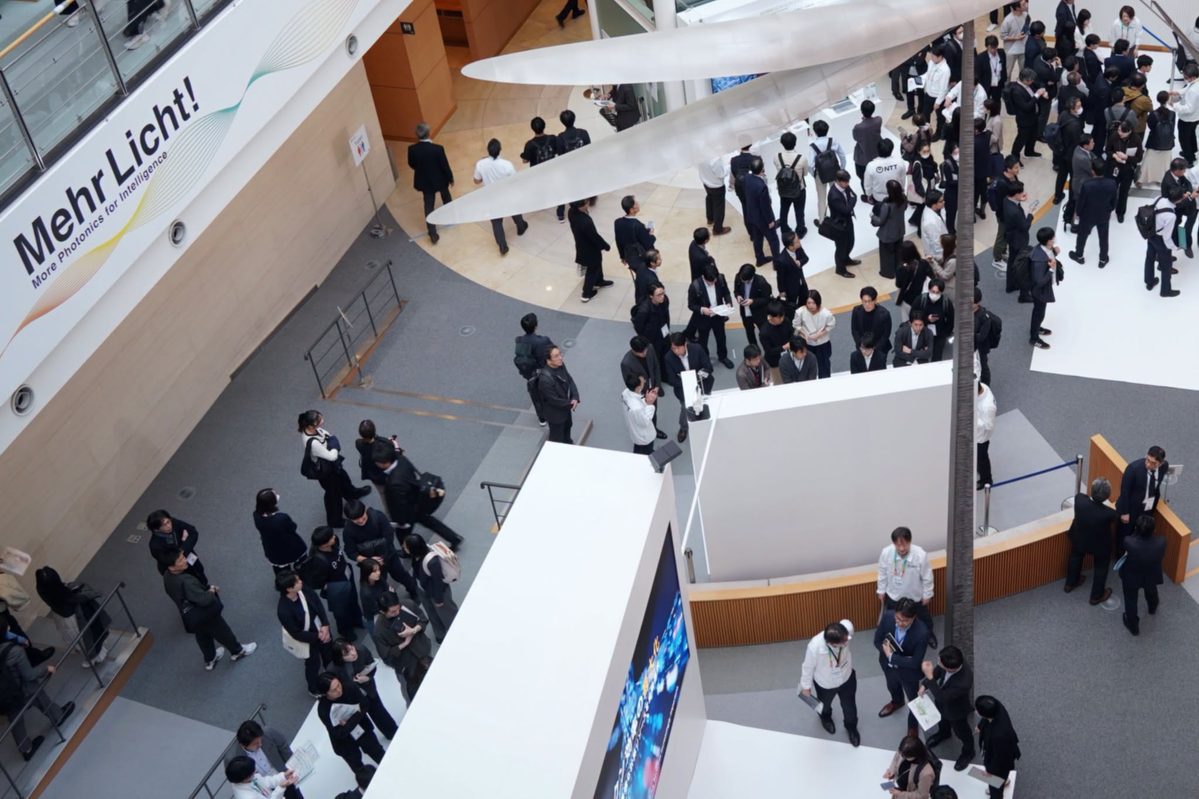
The theme of this year’s forum, “Mehr Licht,” or “More light”. The suspected last words of Johann Wolfgang von Goethe, the German poet and playwright who spent years studying light and color. A phrase that can very soon take on a secondary meaning as it relates to AI.
One that describes how optics can change the future of computing. However, the idea isn’t only centred around energy consumption but also safety. Because the same light that cuts the power bill is what could let machines do the dangerous work humans have taken on for decades.
Why light uses less power
“It was already moving in the wrong direction in terms of power consumption, but AI is just accelerating things,” said Sean Lawrence, the head of innovation at NTT, referring to how the world was already facing an energy problem from growing internet traffic and stored data.
Think of data as cargo and the network as a road. Electricity is a heavy truck on a bumpy stretch, and the faster and farther it goes, the more fuel it burns. What NTT is looking to do is send the same cargo down a smooth highway of light, with no stops in between.
“Electrical data transmission always takes more power than optical data transmission,” said Lawrence. “It’s more efficient to send light through fiber than it is electronics.”
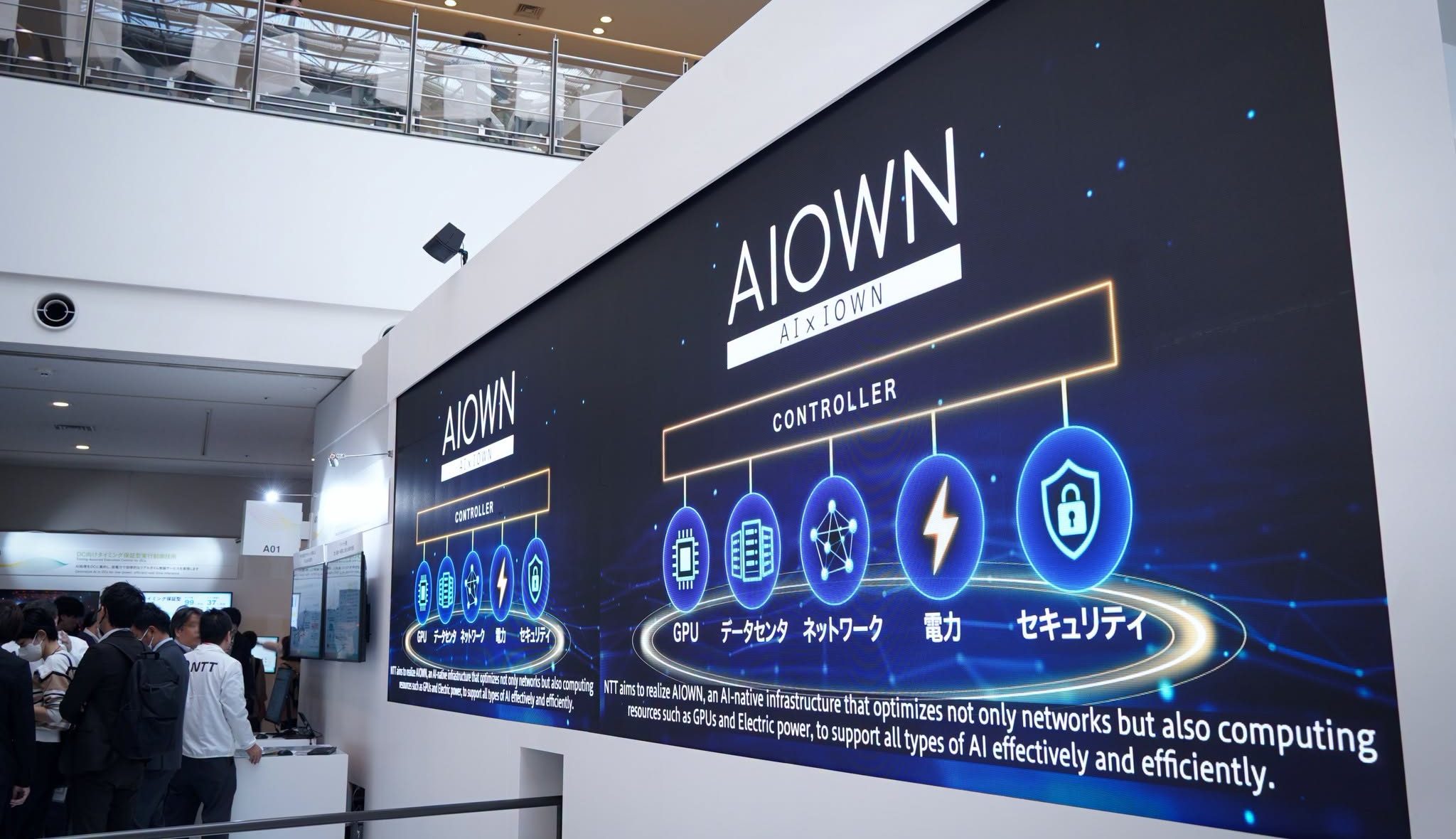
NTT’s plan is called IOWN, short for Innovative Optical and Wireless Network. The goal is to move as much data as possible from electricity to light. That already happens over long distances, Lawrence said, since between continents “that’s all optics these days.”
NTT wants to go much further. “We want to get down into data centers, onto the circuit boards,” he said, and eventually between the chips themselves.
Today’s networks also stop at “toll booths”, what engineers call optical-electrical-optical conversion. Even when fiber runs into a data center, thered is a step in which light is turned into electricity, handled, then turned back into light. “In almost all cases, it’s not end-to-end photonic,” Lawrence said.
Because each conversion adds delay and lost data, NTT’s plan is to take most of the booths out. “When you do APN, we remove those electronic places in the middle, and that reduces the power consumption,” he added, referring to NTT’s All-Photonics Network, which aims to “keep it light all the way.”
Inside the machine, the bumpy stretch, referred to earlier, is the wiring underneath. In a traditional network switch, Lawrence said, there’s about 30 centimeters of electrical wiring between the optics and the chip, “which consumes quite a lot of power when you’re really high speed.” NTT’s new switch, called PEC-2, moves the optical engine right next to the chip and cuts that to about 30 millimeters.
“I know that the PEC-2 switch is targeting a 50% power reduction compared to a traditional switch,” Lawrence said. “So I’m trying to cut that in half there.”
How much of it exists today
The bigger numbers are goals, not results. The IOWN Global Forum, a group of about 175 to 180 companies that NTT set up in 2020 with Intel and Sony, has set targets of 100 times lower power, 125 times more capacity and 200 times lower latency. They’re “not fully baked by any means,” Lawrence said, though some proofs of concept from members are already in production.
The first stage, the All-Photonics Network, is ready for production, Lawrence confirmed. In Japan, customers can buy all-photonic connections between locations through NTT’s telco network. Outside of the country, NTT DATA is the way in.
For example, in India, it linked a subsea cable landing station to several data centers around Mumbai. In Hong Kong, it ran an optical cable under the street from a data center across from the stock exchange to another about 40 kilometers away, which Lawrence called “very exciting for financial customers.”
The next stage is the switch. NTT is building it with Broadcom and a Taiwanese manufacturer, and Lawrence said it should reach the market “a bit later next year.” The stages after that are earlier in development. Lawrence said linking chips to each other, and the parts inside a chip, is “still research.”
Reducing power consumption is part of a bigger goal. The other half is what a steadier, faster network lets people do.
Lawrence said mining companies in South America are among those showing interest in what NTT is developing.
“They don’t want to have people in the mines. It’s dangerous,” Lawrence said. “It’s a lot of time getting up and down to these remote locations. So they want to do full remote mining. And for that, you need the lowest possible latency.”
That is where a dedicated optical network comes in. “It’s fully dedicated, nobody else sharing anything along the way,” he said, which also makes it “very, very high security.” In Japan, he said, two tunneling companies are in late-stage pilots of remote operation.
Light only gets the signal to the edge of the site. “You have to have the private 5G connected to it to get to the last mile to actually control the equipment on the mining site,” Lawrence said.
Where it stands
Most of it is still being built. NTT is adding its optical network, known as APN, to the managed network services NTT DATA sells outside Japan. Lawrence said the managed service hasn’t had a full public launch, and the company wants to complete a couple of projects first. Clients in South America, North America, Europe and Asia are in conversations, and Hong Kong and Japan come first.
“A better network connection by itself doesn’t help you that much,” Lawrence said. What matters is what clients can build on it.
For NTT, that starting point is light. It is “the foundation layer that you have to build the entire solution on,” Lawrence said.