



The author is a MasterCard director, Accenture consultant & fintech co-founder who proposes his own US-based blockchain network platform to facilitate the ‘digital afro’: perspective
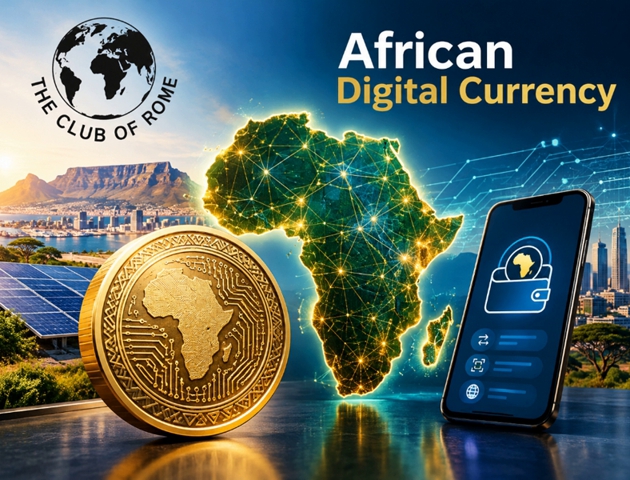
The Club of Rome proposes the creation of a pan-African public digital currency in a new report that begins with “sensemaking of the New World Order.”
The report, “Towards an African common currency: lessons from the dollar, the euro and the digital era” by Club of Rome member and fintech TóróNet co-founder Ken Alabi began with a question and was “gathered into a sensemaking note: ‘What are we to do — sensing and sensemaking of the new world order.‘”
From there, the author laid out a what a pan-African public digital currency would look like, starting with it being a “deliberately non-replacement, publicly issued African common currency framework.”
“The vision of an African common currency is no longer a utopian dream but an achievable project — if pursued with patience, pragmatism and pan-African solidarity”
Club of Rome, Towards an African common currency, October 2026
With six design choices, the idea is to have a public digital currency that is used alongside national currencies, and it is not intended to replace physical cash, nor is it proposed to be a type of private stable coin:
- Build-and-invite governance, not institutional capture. Initial governance rests with the entities building and operating the system. Regional bodies and the African Union are invited to participate and assume broader coordination roles as adoption proves out. A Community Advisory Council is a core, not optional, component of the governance structure.
- Parallel use, not replacement. The common currency circulates alongside national currencies as a complementary unit for cross-border trade, savings and accounting. National monetary sovereignty — including the exchange-rate and interest-rate tools that allow member states to manage the third structural problem identified above — is preserved through a transition that may last a decade or more. The operative precedent is the European Currency Unit (ECU) phase of European integration, not the 2002 banknote switchover.
- Milestone-based, not deadline-based, transition. Phases advance only when measurable adoption and stability indicators are met — active wallets, circulation volume, peg stability, country recognition, audit attestations. The currency remains in any given phase indefinitely if its milestones are not met. Bulgaria’s 19-year path from EU accession to eurozone entry in January 2026 is the operative example.
- Partial, dynamically recalibrated backing — not a return to the classical gold standard. Initial backing is fully liquid; over time the mix shifts towards African currencies, gold already held and audited by African central banks, and productive-capacity assets such as renewable generation. The objective is a confidence anchor during the trust-building phase, not a permanent fixed peg. We acknowledge — and address directly in the relevant section — the volatility, fiscal-space and deflationary risks of commodity backing identified in the heterodox literature
- Real-economy linkage through productive capacity. Demand for the currency is built not solely through reserves but through deepening intra-African trade in food, energy and processed minerals. This complements rather than substitutes the value-chain development and food/energy sovereignty agenda; the currency is most useful where there is real African production to settle. Anchoring the common unit’s value in African productive capacity and intra-African trade flows, rather than in monetary policy made elsewhere, is also the direct answer to the third structural problem identified at the start of this summary: a unit whose valuation tracks African production is one whose valuation African policymakers can influence.
- Public digital currency, not private stablecoin. The instrument is issued and governed by public institutions — central banks, regional development banks and a publicly mandated coordination body — not by private firms extracting yield from sovereign reserves. The framing draws on the public digital money literature rather than the private payment-token model that the US GENIUS Act legitimizes.
“Rather than attempting a big-bang introduction or a purely political decree, we propose a step-by-step strategy leveraging digital transformation and the continent’s collective strengths.
Club of Rome, Towards an African common currency, October 2026
The strategy emphasizes building the currency gradually from the ground up — through infrastructure, trust and usage — before any formal legal tender status across Africa […] This method is incremental and iterative, aiming to create a currency that complements existing systems and can eventually unify them”
The rollout strategy is similar to that of the Fabian Society in the UK — gradual incrementations over time that ultimately lead to total adoption across the entire continent.
As far as convincing the people to go along with such a scheme is concerned, the report encourages “community and grassroots engagement” to frame the digital currency as “a point of pride” by naming it something like, “Our Afro.”
This is coming from the Club of Rome — a Malthusian globalist think tank headquartered in Switzerland.
Naturally, citizens will be skeptical, which is why they will need to be “educated” by a foreign body.
According to the report, “Public education campaigns should begin early — explaining in clear terms what the common currency is, how it would work and how it might improve daily life (through cheaper prices for imported African goods, easier travel, more jobs from increased trade, etc.).”
Targeting influencers is key: “Outreach should leverage media, local languages and community leaders.”
Another term for this type of outreach would be a propaganda campaign.
“If influential voices in these circles start advocating for the currency as a point of pride (‘our Afro’ or some name that resonates), it can build popular momentum that complements official efforts”
Club of Rome, Towards an African common currency, October 2026
The plan is so grassroots and bottom-up, that it will take an unelected international body like the Club of Rome to foment “a pan-African civil society movement around the currency.”
This movement would involve “youth organizations, academia, business chambers and the African diaspora.”
One of the biggest selling points of the digital African currency is, “It must be emphasized that this initiative is fundamentally different; it is designed by Africans for Africans, with the express purpose of enhancing collective autonomy rather than undermining it.”
However, these “official efforts” started in the West, and the report draws several parallels to the digital euro, but it does not agree with replacing national currencies, at least not yet.
“The African common currency should similarly prioritize unbanked populations”
Club of Rome, Towards an African common currency, October 2026
As with any agenda, the question of who benefits is always a concern.
The report says that Africans will benefit.
The report was written by Club of Rome member, MasterCard director, and TóróNet co-founder Ken Alabi.
TóróNet is headquartered in Delaware, USA, according to the company LinkedIn profile.
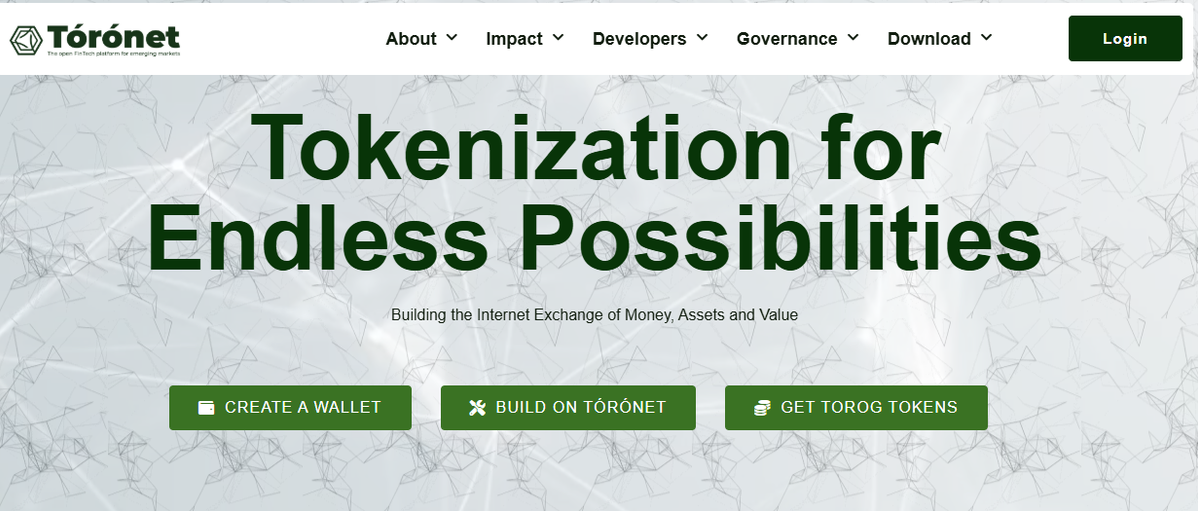
Alabi also plugs his own “open fintech platform” as one of the possible building blocks for facilitating an African digital currency, stating:
“The approach outlined emphasizes building blocks: first connecting payment systems (e.g. scaling up PAPSS [Pan-African Payment and Settlement System] and possibly platforms like TóróNet), then interlinking national digital currencies, and finally introducing a continent-wide unit once the infrastructure and trust are in place.
Club of Rome, Towards an African common currency, October 2026
This incremental strategy ensures that by the time a single currency formally arrives, it will almost feel like a natural next step — because the monetary ecosystem supporting it will already exist“
“One proposal is to issue the African digital currency on a public or permissioned blockchain, where transactions (or at least the state of the currency’s reserve backing) are visible to all stakeholders. This doesn’t mean every individual’s transaction must be public (privacy can be preserved for users via appropriate design), but the key aggregate data — such as how many units are in circulation and what assets back them — could be fully open”
Club of Rome, Towards an African common currency, October 2026
Apart from serving as the Principal Investigator on several US Navy and Air Force Small Business Innovative Research projects and being a consultant at Accenture, Alabi has also led World Bank projects for African governments.
Alabi is also a member of the non-profit Toronet Association, which is based in Geneva, Switzerland and led by a former World Bank managing director, the Club of Rome secretary general, and an International Sustainability Standards board member.
The report is well-thought-out, replete with learnings from the EU digital euro and US stable coin legislation, but in the end, the author argues that a public, pan-African digital currency is a moral pursuit!
“Harnessing Africa’s wealth for African prosperity is both an economic and a moral imperative […] If the leaders and peoples of Africa seize this moment, the 21st century could finally see Africa take its rightful place as a unified economic powerhouse.”
Do you believe this to be true, dear reader?
The Soviet Union had its ruble, the European Union has its euro.
Will there be an African Union with a digital afro?
Step-by-step. One way or another.
Use convenience to centralize, consolidate, and control.
This is the modus operandi of unelected globalists; this is “Sensing and sensemaking in the new world order.”
“The coming years should be used to build consensus, experiment in pilots and gradually expand the circle of participation.
Club of Rome, Towards an African common currency, October 2026
By the time today’s newborn African children reach adulthood, they could transact in a single African currency as easily as crossing from one phone network to another today”
Image source: AI generated with ChatGPT