



Artificial intelligence is creating new possibilities for the insurance industry, but deploying it at scale requires more than access to advanced models. Insurers must also modernize the systems that manage policies, claims, billing and risk, while ensuring that automated processes remain reliable in a highly regulated environment.
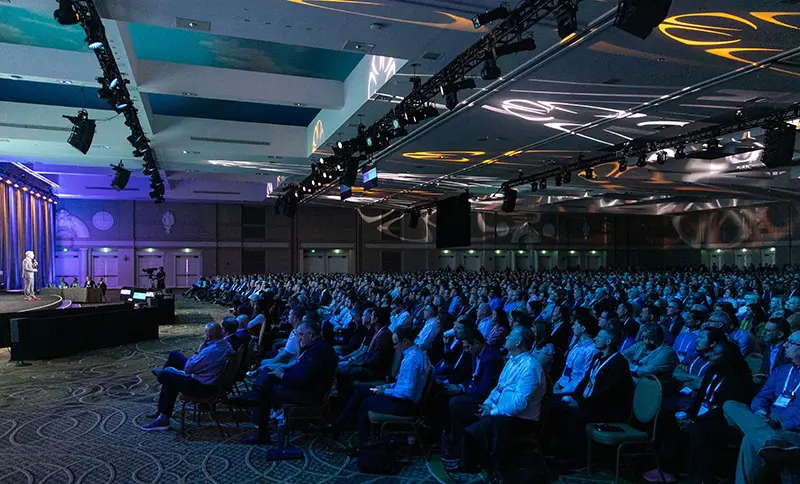
This challenge will be a central theme at Guidewire Connections 2026, taking place October 26–29 at the Fontainebleau Las Vegas. The annual gathering is expected to bring together more than 3,800 insurance professionals, technology specialists and industry partners to discuss how AI and modern insurance platforms can reshape property and casualty (P&C) operations.
The focus reflects a broader shift in enterprise technology. Rather than treating AI as a standalone experiment, organizations are increasingly looking at how to integrate it into the systems where business decisions are made and operational processes are executed.
Insurance operations depend on interconnected processes that handle substantial amounts of structured and unstructured data. Underwriting, claims assessment, policy administration and customer servicing all require information to move across systems without compromising accuracy or consistency.
AI can help automate document processing, support risk assessment and accelerate claims workflows. However, these applications depend on data quality, the accessibility of legacy systems and the ability to integrate new capabilities into existing operations.
The distinction matters as insurers move from testing individual AI applications to deploying them across business functions. A successful pilot does not necessarily translate into a reliable enterprise-wide implementation, particularly when organizations must account for regulatory obligations, security requirements and operational continuity.
Modernizing insurance infrastructure for AI
Guidewire develops software platforms for property and casualty insurers, including applications that support policy administration, billing and claims management. Its approach to AI focuses on integrating intelligent capabilities into insurance workflows, helping companies automate tasks, support decisions and improve operational efficiency.
At Connections 2026, the company plans to explore how insurers can combine AI with cloud technology, data and modern core systems to build more efficient and customer-focused operations.
The event’s official program includes speakers from the insurance and technology sectors, among them Randy Termeer, president of the Property and Casualty Group at USAA; David Epstein, author and AI journalist; and Natalie Simms, vice president of Operations & Modernization at TD Insurance.
The discussions come as insurers face pressure to improve service delivery and operational efficiency while adapting to changing customer expectations and technological developments. The question is increasingly how to deploy AI in ways that produce measurable business results, rather than simply adding new tools to existing workflows.
Legacy infrastructure remains a significant consideration. Older systems can make it difficult to integrate new applications, access data consistently and introduce changes without disrupting business-critical processes. Cloud migration and core-platform modernization can help address these constraints, although they require careful planning around integrations, security and operational resilience.
Technology service providers are helping insurers navigate this transition. Their work often involves connecting modern platforms with existing systems, preparing data environments and introducing new capabilities without requiring companies to rebuild their entire technology stack.

GFT Technologies Canada is one example of this ecosystem. The company works with Guidewire on insurance technology modernization, cloud transformation and AI-related applications. GFT has reported migrating a Canadian insurer’s legacy Guidewire platform to the cloud, covering more than 50 integrations, with the goal of supporting faster product launches and reducing operational complexity.
André Gagné, CEO of GFT Technologies Canada, is among the company’s representatives attending Connections 2026. GFT’s participation highlights the role of technology partners in connecting insurance software, cloud infrastructure and data systems to support AI deployment.
Moving beyond AI experimentation
The insurance industry’s AI conversation is shifting from identifying potential use cases to addressing the practical requirements of implementation. Automating a single task may deliver incremental improvements, but broader transformation requires insurers to examine how information flows across departments, how decisions are made and how technology systems support those processes.
That also means evaluating AI against concrete outcomes, including processing times, operational costs, risk assessment and customer experience. Results will depend on the application, the quality of the underlying data and the insurer’s readiness to integrate the technology into existing workflows.
For the sector, the next phase of AI adoption will involve more than selecting models or introducing automation. It will require aligning software, data, cloud infrastructure and business processes so intelligent capabilities can operate reliably at scale.
As insurers and technology providers gather in Las Vegas, the underlying challenge remains how to turn AI’s potential into operational improvements. The strength of the infrastructure supporting these systems may prove just as important as the capabilities of the technology itself.

Disclosure: This article mentions a client of an Espacio portfolio company.