


The platform maps commercial buildings across the United States, estimates the value of exterior cleaning projects, and gives independent operators tools to identify potential customers.
Starting a business often requires more than knowing how to do the job. Finding customers, identifying profitable opportunities, and knowing what to charge can be just as difficult, particularly for small operators competing against established companies with dedicated sales teams and estimating departments.
That information gap is what SkyPSI wants to address with a new platform that puts commercial cleaning opportunities across the United States on a map, complete with estimated prices for individual jobs.
The Dallas-based technology company announced the nationwide launch of Operator+, a free application that maps 17.1 million commercial buildings and generates estimates for drone-powered exterior cleaning services.
According to SkyPSI, the average commercial cleaning job represented on the platform is worth approximately $13,500. Users can access the estimates with a Google account, without paying for a subscription.
“Every building in your city is a job somebody is going to get paid for,” said SkyPSI founder Vic Pellicano. “The only question is whether you know about it.”
The platform is built around a relatively straightforward proposition: independent drone operators should have access to the information and tools that larger contractors use to identify and price commercial projects.
For a small crew operating with a drone and a pickup truck, determining which buildings need cleaning, how much a project might cost, and who to approach can involve considerable guesswork.
Operator+ attempts to consolidate those activities into a single application.
Its central feature is SkyEstimate, which assigns a price to the exterior cleaning job associated with each building and provides an explanation of how the estimate was calculated. The application also includes a map of commercial properties, scheduling capabilities, customer and job management, online invoicing, and an AI-powered virtual assistant called Sky.
The assistant functions as a virtual crew chief, answering questions and directing operators toward buildings that match their capabilities.
While the basic account provides access to building estimates and the platform’s operational tools, paid subscriptions unlock immediate contact information for the decision-makers responsible for signing commercial property service contracts. New accounts also receive a 30-day Starter trial.
The distinction matters because identifying a potential customer is only one part of acquiring a contract. Reaching the person authorized to approve the work is another.
Why drones could change the economics of commercial cleaning
SkyPSI’s launch also comes as commercial cleaning faces an opportunity to incorporate more robotics into traditionally labor-intensive operations.
The company points to a market opportunity that could reach $860 billion by 2034. This projection is broadly consistent with Fortune Business Insights’ forecast for the global cleaning services market, which estimates the sector will reach $859.2 billion by that year. However, the report covers the broader cleaning services market, not exclusively commercial cleaning.

SkyPSI also claims that robots currently handle barely 1% of commercial cleaning work, highlighting what it sees as significant room for automation.
Exterior building maintenance is one area where drones could alter the economics of service delivery.
Traditional facade cleaning can involve rope access, specialized equipment, and workers operating at considerable heights. These requirements can make frequent cleaning expensive and introduce additional safety considerations.
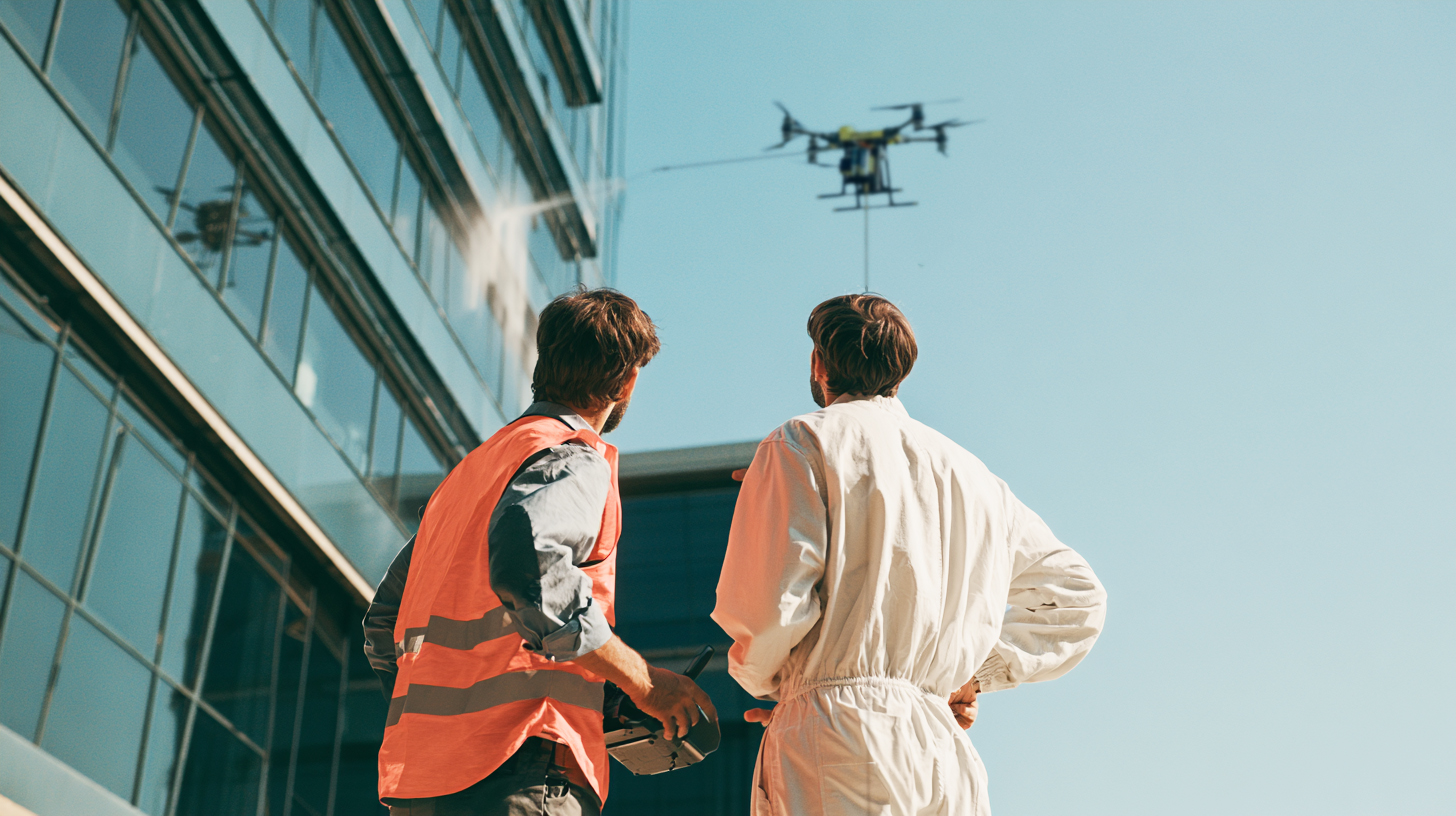
Drone-powered cleaning offers a different operating model. Rather than relying on workers suspended alongside buildings, operators can conduct cleaning activities from the ground while an FAA-certified pilot controls the aircraft.
According to SkyPSI, this approach could also make it economically viable to clean building facades several times a year, rather than limiting maintenance to an annual service because of the costs and risks associated with conventional methods.
The potential opportunity, therefore, extends beyond replacing individual cleaning tasks. It involves changing how frequently commercial properties can receive maintenance and how independent service providers can deliver it.
From drone cleaning to a broader robot economy
Operator+ follows SkyPSI’s initial launch in August 2026, when the company introduced its operations in the Dallas-Fort Worth area.
At the time, its expansion strategy focused on growing across the Texas Triangle before reaching other American cities. The nationwide availability of Operator+ effectively accelerates the geographic reach of its software, allowing operators in markets such as Phoenix, Pittsburgh, and Portland to explore commercial properties through the application.
However, the company’s ambitions extend beyond exterior cleaning.
SkyPSI says the underlying platform is designed to accommodate additional commercial equipment and services over time, potentially giving independent operators access to more revenue opportunities through the same infrastructure.
That strategy reflects a broader question surrounding the expansion of the robot economy: whether automation will primarily concentrate economic opportunities among large companies or create new entry points for smaller businesses.
SkyPSI is positioning its platform around the latter possibility.
Pellicano, who described growing up in a trailer park and previously living out of his car, framed the product around the difficulties of finding economic opportunities without access to established business networks.
“Operator+ is the map,” he said, describing the application as a way for working people to identify opportunities in their own communities without paying for access.
Whether that approach translates into a meaningful expansion of independent drone-cleaning businesses will depend on operators’ ability to turn estimates into signed contracts. But by making commercial property data and job pricing accessible, SkyPSI is attempting to remove one of the barriers that can prevent small service providers from entering the market.
The company’s longer-term proposition is that the robot economy will not only change how work gets done, but also who gets the opportunity to build a business around it.

Disclosure: This article mentions a client of an Espacio portfolio company.