DHS to face threats, opportunities while monitoring users in the metaverse: RAND
May 30, 2023
SHARE
For the DHS, the metaverse represents a new environment for mass surveillance, data collection & influencing narratives: perspective
The US Department of Homeland Security (DHS) should expect to encounter potential threats and opportunities in monitoring user activity in the metaverse, according to a recent RAND perspective report.
Given that, “many of the things that happen in the physical world might happen in a metaverse,” RAND set out to explore the potential threats and opportunities that the DHS might face as it looks to monitor user activity in the metaverse.
“As DHS grapples with emerging challenges by monitoring and analyzing users’ activity in metaverses, it should undertake legal and ethical reviews of what information is collected and how it is managed”
RAND Corporation
According to the report, “The Metaverse and Homeland Security: Opportunities and Risks of Persistent Virtual Environments:”
“Opportunity areas include research, outreach, preparedness, and training” as well as the ability for “DHS to monitor possible threats and gather evidence to help secure the United States.”
For the DHS, the metaverse represents a new environment for mass surveillance, data collection, and influencing narratives.
According to the report, in the metaverse:
“DHS might find it useful to monitor [public] discourse to identify emerging themes relating to shifts in values, such as the heightened interest in diversity and inclusion, or to identify actual threats, such as those posed by white nationalist organizations.”
In addition to identifying “emerging themes,” the authors say that DHS can use the metaverse to engage the public with security messaging.
For example, the metaverse “could provide an environment in which DHS and other organizations with an interest in safety and security can engage people in constructive ways. This could take the form of expanded versions of the ‘If you see something, say something’ campaign.”
Other metaversal opportunities include DHS recruitment campaigns, conducting training exercises for DHS agents, and preparing for natural disasters.
“DHS will have to be particularly mindful about how its use of metaverses, or response to emerging challenges, will affect civil liberties, especially the implications for personal privacy and freedom of speech“
RAND corporation
Potential threats for the DHS in the metaverse “include misinformation and disinformation, abuse, organized violence, cybersecurity threats, and a set of ethical and equity issues pertaining to DHS’s activities in the metaverse.”
Since many interactions and conversations in a metaverse will be speech-based as opposed to written, much like in face-to-face communication, the RAND report says that it “might be harder for DHS and even metaverse platforms themselves to track the spread of false and misleading information and to identify key content creators and disseminators.”
Once again, we see the DHS’s interests in the metaverse relating to surveillance, data collection, and influencing narratives.
Other perceived metaversal threats include deepfakes, abuse, harassment, and terrorist recruitment.
With all the surveillance and monitoring user activity, the RAND report suggests that the DHS take a close look at the ethical implications, such as privacy, freedom of speech, and civil liberties.
According to the report, “As DHS grapples with emerging challenges by monitoring and analyzing users’ activity in metaverses, it should undertake legal and ethical reviews of what information is collected and how it is managed.
“In these and other activities, DHS will have to be particularly mindful about how its use of metaverses, or response to emerging challenges, will affect civil liberties, especially the implications for personal privacy and freedom of speech.”
Between the potential threats, opportunities, and ethics, the RAND authors recommend that the DHS should:
Understand the technology, opportunities, and challenges:
DHS can continue to analyze the metaverse, paying close attention to the ways the relevant technologies are developing and are being used, so that it is prepared to identify opportunities to advance its mission while conducting risk analysis to identify potential harms
Assess DHS capabilities, policies, and roles:
With a better understanding of the metaverse, DHS can determine how to engage within it to leverage opportunities and respond to threats. The department can determine what capabilities it needs, including specific metaverse technologies, such as simulation tools, workforce and personnel, or new helpful policies or authorities.
Build trust and partnerships:
DHS should work with private-sector entities to understand their plans for developing the metaverse, and DHS can work with these companies to help foster interoperability that will make it easier for DHS to collaborate with SLTTs [state, local, tribal, and territorial governments] and other operational partners.
“Many of the things that happen in the physical world might happen in a metaverse”
Rand Corporation
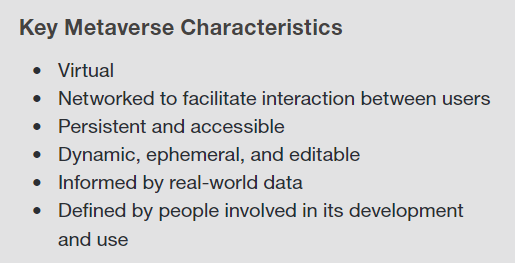
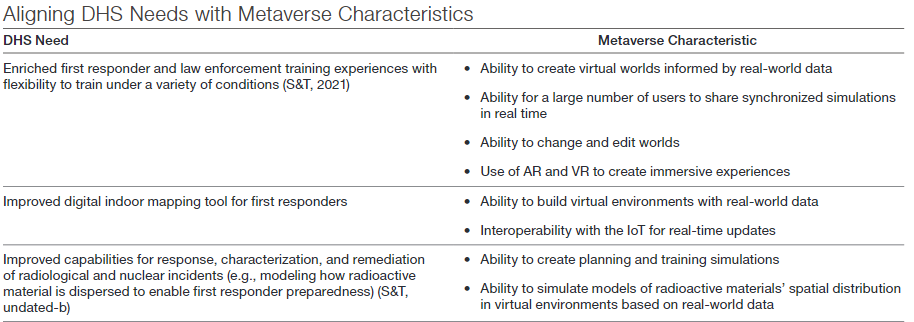
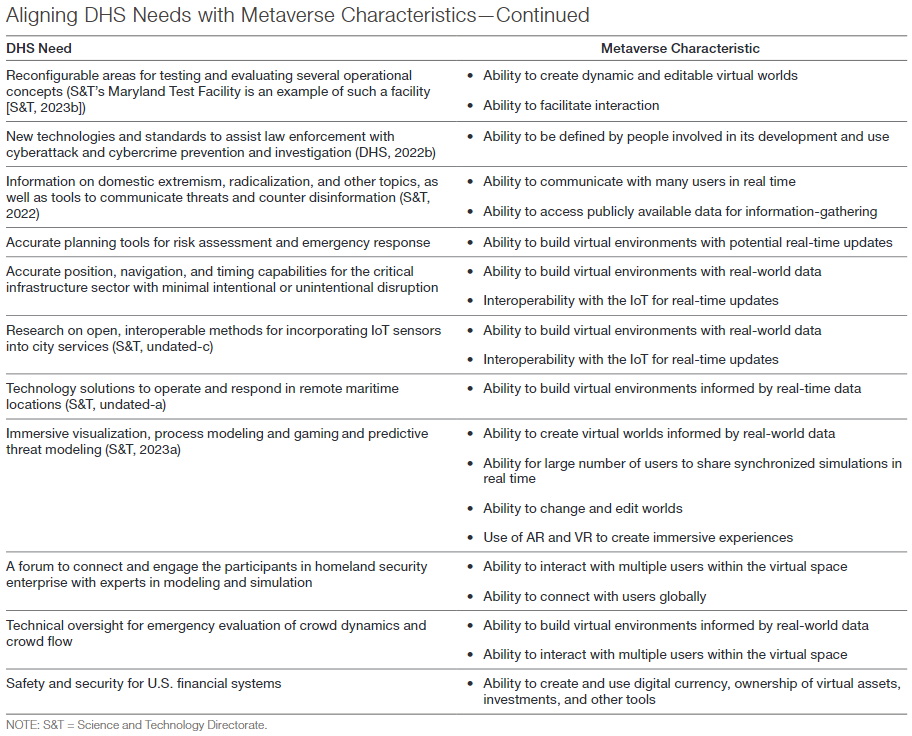
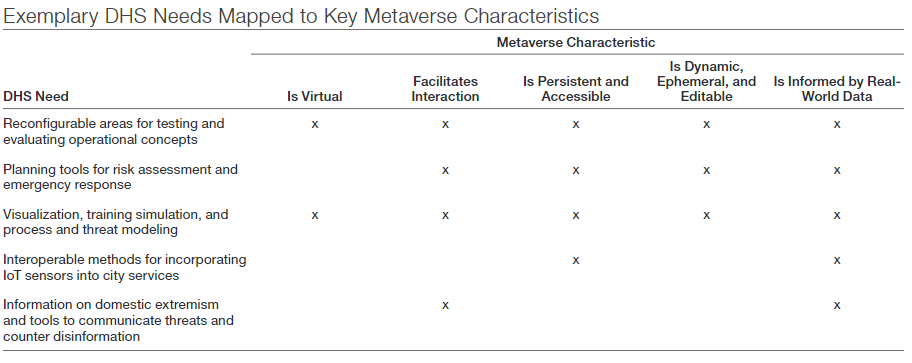
The DHS focuses on tasks that align with its six core missions, and after mapping DHS mission sets to characteristics of the metaverse, the RAND authors found that almost all the characteristics pertain to most of the six mission sets.
The DHS mission sets include:
Counter terrorism and homeland security threats.
Secure US borders and approaches.
Secure cyberspace and critical infrastructure.
Preserve and uphold the nation’s prosperity and economic security.
Strengthen preparedness and resilience.
Champion the DHS workforce and strengthen the department.
The report was funded in part by the DHS via the RAND Homeland Security Research Division (HSRD), which operates the Homeland Security Operational Analysis Center (HSOAC), which is operated by RAND under contract with the Department of Homeland Security.
Brains Byte Back interviews startups, entrepreneurs, and industry leaders that tap into how our brains work. We explore how knowledge & technology intersect to build a better, more sustainable future for humanity. If you’re interested in ideas that push the needle, and future-proofing yourself for the new information age, join us every Friday. Brains Byte Back guests include founders, CEOs, and other influential individuals making a big difference in society, with past guest speakers such as New York Times journalists, MIT Professors, and C-suite executives of Fortune 500 companies.
That Sales Call Might Be a Bot. In Most States, It Doesn’t Have to Tell You
byThe Sociable
AI sales agents and AI phone calls now sound convincingly human, but in most U.S. states, companies aren't legally required to disclose when you're talking to a bot. In this episode of Brains Byte Back, journalist Erick Espinosa speaks with Cameron Powell, a partner at DeepLaw, about the patchwork of AI disclosure laws in the U.S. and how they compare to Europe.
Listeners in a 2025 Queen Mary University of London study mistook AI-cloned voices for real people 58% of the time. Meanwhile, social media is full of people cornering bots that refuse to admit what they are, and just as many people selling AI sales agents to businesses. This episode looks at what the law actually requires.
What you'll learn:
Europe: Article 50 of the EU AI Act, in force since August 2026, requires AI systems that interact with people to disclose that they're machines.
Maine: the strongest U.S. rule. Bots in commerce must disclose whenever they could pass for human, and consumers can sue.
Utah: a bot only has to admit it's AI if you ask directly.
California: its two bot laws were written for online bots and pre-recorded calls, not AI that talks back in real time.
New Jersey: disclosure only applies to bots selling merchandise or real estate.
The FTC: it can treat undisclosed bots as deceptive in commercial cases but, according to Powell, has never seriously enforced it.
What businesses using AI for sales, marketing and customer service should consider next.
Quick answers:
Do AI sales calls have to tell you they're AI? In most U.S. states, no. Maine requires disclosure when a bot could mislead a consumer; Utah requires it only if you ask; New Jersey only for merchandise and real estate sales.
Does the EU require AI disclosure? Yes. Article 50 of the EU AI Act requires it.
How can you tell if a caller is a bot? Ask directly: ”Are you a real person?” In some states, the answer is legally protected. But not in most.
Guest: Cameron Powell, Partner at DeepLaw, a law firm advising companies on AI and innovation.
Host:Erick Espinosa, host and journalist, Brains Byte Back by The Sociable.