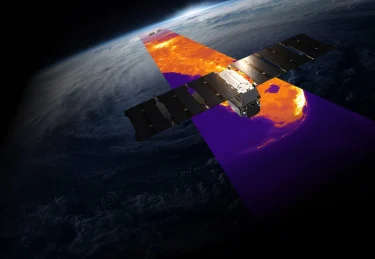




On a peninsula of peat bog and crofting land in the far north of Scotland, a U.S. company wants to launch rockets that behave less like spacecraft and more like delivery vans.
LEAP, a Colorado startup building mass-producible launch vehicles, has signed a Memorandum of Understanding with Highlands and Islands Enterprise (HIE) to develop recurring launches from Sutherland Spaceport. If the plans hold, the site on the A’Mhoine peninsula would become the first launch location outside the United States in LEAP’s planned global network, and its base for European customers.
The idea behind that network is ambitious: LEAP wants to move critical cargo anywhere on Earth within minutes by sending it on a suborbital arc through space, alongside a more conventional service carrying small satellites into orbit. A company spokesperson once summed it up as “FedEx, but in space”.
The MOU is non-binding, and any launch will need technical assessment, regulatory approval and final commercial contracts before a rocket leaves Sutherland. LEAP says it is strongly considering the UK for its European headquarters.
Space as a supply chain
Most launch companies sell rides to orbit whereas LEAP sells speed. It calls itself a dual-use logistics company, meaning its vehicles are built to serve commercial clients and national-security missions alike, from orbital delivery and point-to-point transport to hypersonic testing.
“We’re not just building a rocket. We’re building a global logistics network, and a network needs launch sites wherever customers require them,” said CEO Chris Beckman.
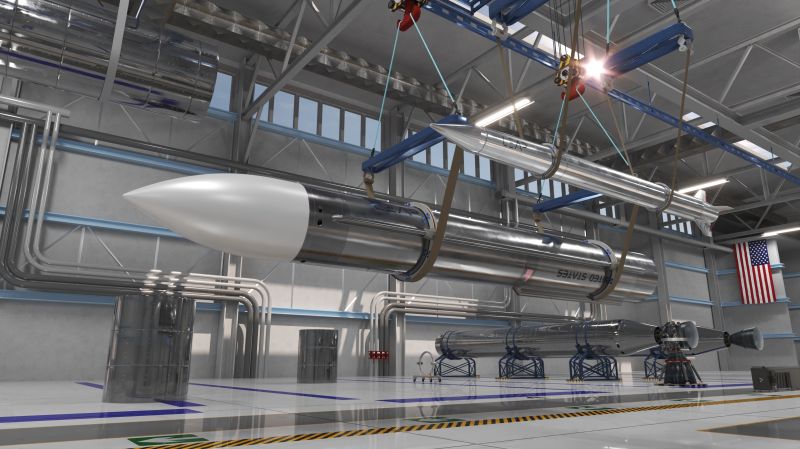
That logic shapes the hardware. Instead of a few giant launch complexes, LEAP pairs cheap, mass-produced rockets with modular factories, each designed to build more than 30 vehicles a year, and launch equipment that fits in shipping containers.
In May, the company’s Bullfrog rocket flew from a desert pad in Mojave, California less than 30 hours after arriving at the range, according to Payload, and was recovered afterwards. Beckman has said he expects future setups to take between 12 and 24 hours. LEAP builds its own fuel tanks for roughly $5,000 each.
Bullfrog is small, carrying around 100 pounds. The larger Bighorn vehicle, which would handle suborbital, point-to-point and orbital missions from Sutherland, is targeting its first orbital flight in 2028.
Who rapid delivery is for
Moving goods through space in minutes raises an obvious question about who needs that kind of speed, and at what cost.
LEAP is open that defence is part of the answer. Its vehicles are pitched for hypersonic testing and targets as well as cargo, and the logistics case often comes back to getting something urgent to people who need it fast, whether a military unit or a disaster zone.
That dual-use character matters for a site like Sutherland, with spaceports in Europe increasingly tied to sovereignty and security. In September, EU Space Commissioner Andrius Kubilius warned that Europe is running short of launch capacity, pointing to a sharp rise in planned defence and government satellites over the next decade. A launch provider that also works with the defence sector is likely to find willing customers on this side of the Atlantic.
It also means the communities hosting these sites will want clarity about what is being launched over their coastline, and why.
A community that has been here before
Sutherland is not a blank slate. The spaceport sits on land owned by the Melness Crofters Estate, a community landowner, and the local population has already lived through one failed attempt.
Orbex, the Scottish rocket maker that held the original lease, walked away from the site in December 2024 to launch from Shetland instead, then collapsed into administration in February after drawing more than £70 million ($93.7 million USD) in public funding. Most of its staff lost their jobs.
HIE, the development agency that first proposed the spaceport in 2018, bought the site’s assets back from the liquidators in August.
The crofters sound cautiously hopeful about the new arrival. Representatives met LEAP on its most recent visit, and estate chair Dorothy Pritchard said the company understands “that a successful spaceport will create opportunities beyond launches alone.”
That is what the community appears to want most. Talks between LEAP and UK stakeholders cover possible manufacturing and test work in the Highlands and Islands, supply chain contracts, local hiring, university partnerships and infrastructure support. For a remote region that has seen young people leave for decades, skilled jobs matter more than the launches themselves.
HIE’s David Oxley said the agency has spent the months since the acquisition talking to the market about next steps that “will aim to deliver high-quality career opportunities and other benefits for the local community.”
Scottish officials are keen to see it work. Stephen Flynn, the Scottish Government’s Cabinet Secretary for Economy, Tourism and Transport, called the MOU “good news for Scotland’s space sector and in particular for businesses and communities in the Highlands and Islands.”
What comes next
The immediate step is a joint workstream between LEAP and HIE to map out a practical route to a first launch. That means regulatory sign-off from the Civil Aviation Authority, infrastructure on a site where little has been built, and commercial terms both sides can live with.
LEAP will also be competing for attention. The UK has still never hosted a vertical launch, and SaxaVord in Shetland, which holds the country’s only full licence, is waiting on a delayed maiden flight from German company Rocket Factory Augsburg.
Elsewhere in Europe, Isar Aerospace has already flown from Norway and Spain’s PLD Space is preparing its first orbital rocket.
LEAP is betting that rockets which can be set up in a day and flown again soon after will give it an edge in that race. Sutherland, a site that has already lost one operator, will find out whether that bet holds.
Featured image: via LEAP

Disclosure: This article mentions a client of an Espacio portfolio company.