



Nuclear-powered data centers built in certain countries could provide foreign nations access to data and compute via digital embassies: perspective
The United States, Japan, and South Korea sign a trilateral memorandum of cooperation to accelearte small modular reactor (SMR) deployments in other countries, starting with the Indo-Pacific — a region that is rapidly expanding AI data center construction.
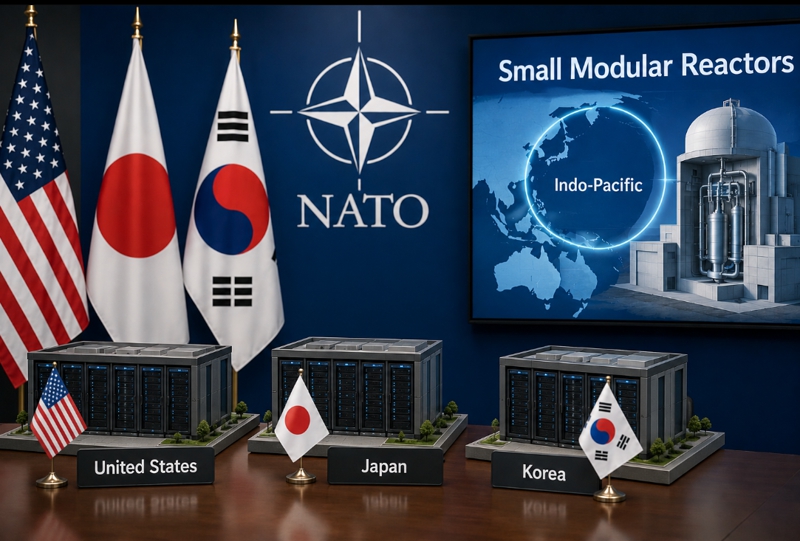
Today, representatives from the three countries signed the MOC at the sidelines of the NATO Summit in Ankara, Turkey as a means to “foster fleet deployment models that de-risk project development, achieve economies of scale, catalyze private investment, streamline licensing processes, and optimize supply chains.”
“A coordinated trilateral approach positions American, Japanese, and Korean firms to provide partners in the region with more competitive alternatives to meet their growing energy demands and to uphold the highest standards of nuclear safety, security, and nonproliferation as new reactor technology increasingly comes online”
US State Department, The United States, Japan, and the Republic of Korea Sign a Trilateral Memorandum of Cooperation on Small Modular Reactor Deployments in Other Countries, July 2026
Nowhere in the US State Department press release does it mention that the SMRs would be used for powering AI data centers.
However, the Indo-Pacific is a region teeming with data center expansion in countries like Indonesia, Japan, Malaysia, and of course, China, which dominates the region with approximately 450 facilities.
According to a 2024 report from the Italian Institute for International Political Studies, data centers are “The Indo-Pacific’s Hottest Trend.”
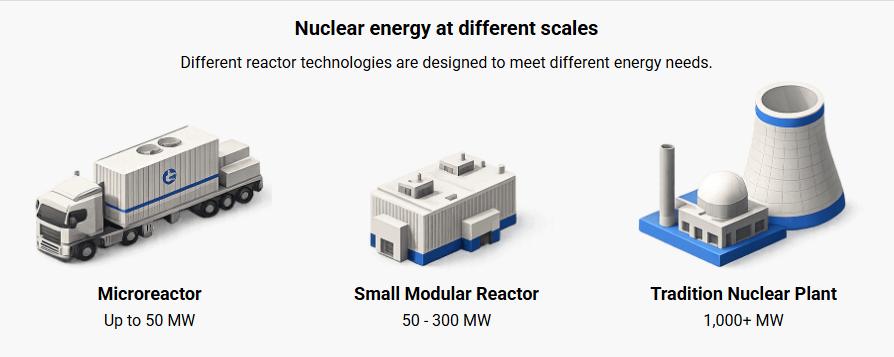
Meanwhile, small Modular Reactors have been put forth as a potential means to generate between 50MW to 300MW of nuclear power, with applications that include data centers, according to the Idaho National Laboratory.
For the trilateral MOC, the US is committing over $10 million to “advance SMR project development activities and establish an SMR Regional Training Hub for workforce development.”
That funding comes from the US State Department’s “Foundational Infrastructure for Responsible Use of Small Modular Reactor Technology” (FIRST) program that was announced at former President Biden’s 2021 Leaders’ Summit on Climate.
The FIRST program was designed to help partner countries:
- establish a nuclear power program under the highest international standards for nuclear security, safety, and nonproliferation;
- take advantage of next generation nuclear innovations and technologies in their sustainable energy plans;
- meet their clean, reliable energy goals while protecting the global climate we all share; and
- deepen relationships through government, industry, national laboratory, and university engagements.
Again, no mention of using SMRs to power data centers, but these mass surveillance processing hubs are consuming more energy than cities, and maybe even countries — if UN Secretary-General Antonio Guterres is correct in his assessment.
Speaking at the UN Global Dialogue on AI Governance on Monday, Guterres said, “Data centers already consume more electricity than most countries. By 2030, they could use more electricity than all but five nations.”
“I have, two weeks ago, put forward the AI Environmental Transparency Initiative, calling on every AI company to measure and publicly disclose the full footprint of its systems: carbon, water, and land, and to commit to power every data center with renewable energy by 2030”
Antonio Guterres, UN Global Dialogue on AI Governance, July 2026
With many nations jumping onboard the net-zero craze, investments into SMRs are growing, as further evidenced by today’s trilateral MOC signing.
According to CarbonCredits.com, Small Modular Reactors “bridge the gap between large nuclear plants and renewable energy, offering steady, carbon-free power that can support solar and wind during periods of low sunlight or wind.”
As far as energy applications go, data centers are just one example, but according to the Idaho National Laboratory, SMRs also support grid reliability, manufacturing and industry, and water resources like desalination plants.
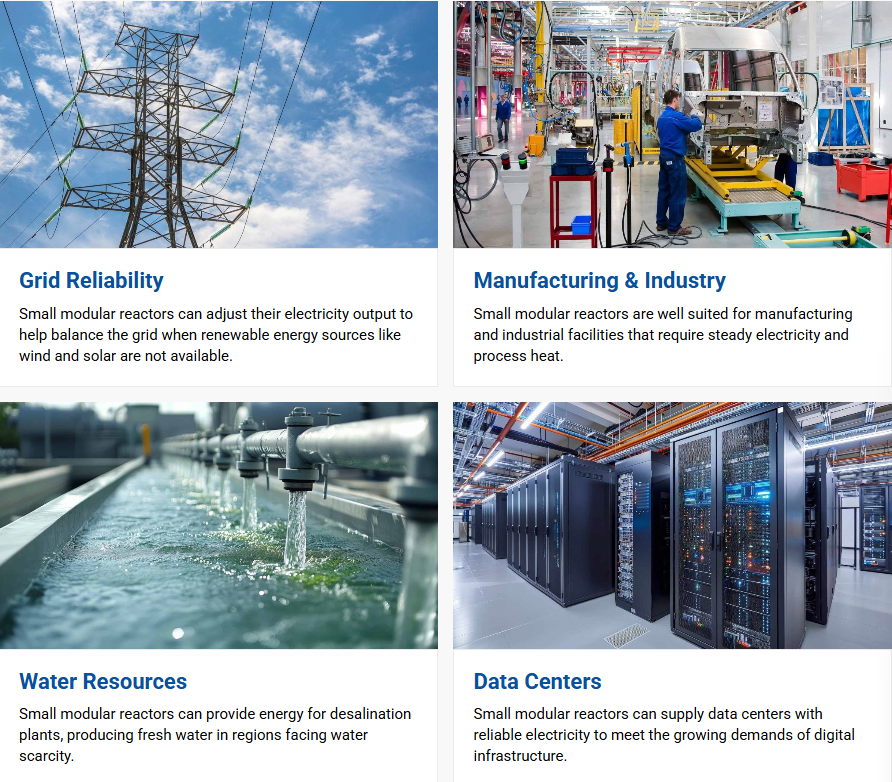
Source: Idaho National Laboratory
Nuclear is also a hot topic at globalist gatherings, particularly with regards to data centers.
Renewables like wind and solar aren’t enough to power data centers on their own, according to BlackRock CEO and current World Economic Forum interim co-chair Larry Fink.
For example, speaking at the WEF’s Special Meeting on Global Collaboration, Growth and Energy Development in Riyadh, Saudi Arabia in April, 2024, Fink told the panel on “Investing Amid Global Fracture” that intermittent wind and solar were not going to cut it when it came to powering AI data centers.
“They’re now talking about data centers that are going to be one gigawatt — that powers a city! There’s one tech company that I spoke to the CEO last week who said, ‘Right now with all their data centers is about five gigawatts; by 2030 they need 30 gigawatts.’ Thirty! The amount of power that’s needed to use AI has huge impact on society”
Larry Fink, WEF Special Meeting on Global Collaboration, Growth and Energy Development, April 2024
Speaking at the same WEF meeting as Fink, but on a separate panel called “The Role of New Nuclear,” Axiom Space executive chairman Kam Ghaffarian said that when it came to powering data centers, “All of the energy formulas that we’ve been thinking about we’ve got to throw them out the door.”
Nuclear was his solution.
“The amount of power these data centers need […] If we’re not going to use the fossil fuel — of course we need renewables — but how are we going to solve the problem? Then, you come to this solution that, OK, nuclear”
Kam Ghaffarian, WEF Special Meeting on Global Collaboration, Growth and Energy Development, April 2024
According to the latest US State Department press release, “The MOC outlines opportunities for our three countries, which have complementary advantages in the civil nuclear field, to encourage mutually beneficial cooperation among their respective nuclear industries.”
Once again, no mention of data centers, but this idea of certain nations like the US, Japan, and Korea having “complementary advantages” to “encourage mutally beneficial cooperation” sounds similar to recent proposals regarding “digital embassies.”
Digital embassies, where host countries build data centers in their citizens’ backyard for foreign nations to access, is a concept championed by the World Economic Forum (WEF), the Tony Blair Institute (TBI) for Global Change, and other unelected globalist entities.
A digital embassy is “a legally, technically and politically governed arrangement that allows states to preserve, restore or operate critical digital functions through trusted infrastructure beyond their territory,” according to the TBI insight report, “Digital Embassies and AI Sovereignty: Building Resilient States Beyond Borders,” published on May 28, 2026.
“As countries race to secure access to data, compute, and cloud infrastructure, it is becoming increasingly clear that not all the nations can or should build the AI infrastructure within their own borders […] Digital embassies enable countries to extend critical digital infrastructure beyond their borders while retaining control over data, compute, and governance”
Cathy Li, WEF Annual Meeting, January 2026
“Today, on the margins of the NATO Summit in Ankara, Türkiye, the United States Secretary of State Marco Rubio, Japan Foreign Minister Motegi Toshimitsu, and Republic of Korea Foreign Minister Cho Hyun signed a Memorandum of Cooperation (MOC) to establish a framework for trilateral cooperation on accelerating small modular reactor (SMR) deployments in other countries, with an initial focus on the Indo-Pacific”
US State Department, The United States, Japan, and the Republic of Korea Sign a Trilateral Memorandum of Cooperation on Small Modular Reactor Deployments in Other Countries, July 2026
With the signing of today’s MOC, the US, Japan, and Korea have agreed to help advance the development of small modular reactors in other countries.
These SMRs may be used to power data centers, but that remains to be seen.
From there, these data centers may host the entire digital public infrastructure (DPI) data of foreign nations through digital embassies.
Digital embassies ensure that the global DPI control grid remains operational and resilient to disruptions.
In this way, nuclear-powered data centers built in certain countries could provide foreign nations access to data and compute via digital embassies.
Once digital embassies are established, the main components of DPI — digital ID, programmable fast payment systems, and massive data exchanges between public and private entities — can continue to track, trace, surveil, and control citizens digitally, wherever they may dwell.
And since the MOC was signed at the NATO Summit, you can probably bet your britches these SMRs will have military applications.
Image Source: AI generated with ChatGPT