



Brain computer interfaces, bio-synthetic psychedelics, molecular engineering, and more are all on the table for DARPA’s “SHINE” disruption opportunity to rewire the human brain.
The US Defense Advanced Research Projects Agency (DARPA) will be holding an information session webcast on August 25 for its anticipated research program called Selective Harnessing of Intrinsic Neuroplasticity Engineering (SHINE).
At present, DARPA’s SHINE program looks to develop the next generation of neuroplasticity technologies that can target precise points in the brain to repair dysfunctional neural circuits.
“SHINE aims to harness neuroplasticity to precisely and non-invasively target and enhance the brain’s ability to adapt and rewire itself, allowing for more complete recovery after injury”
DARPA, SHINE, August 2026
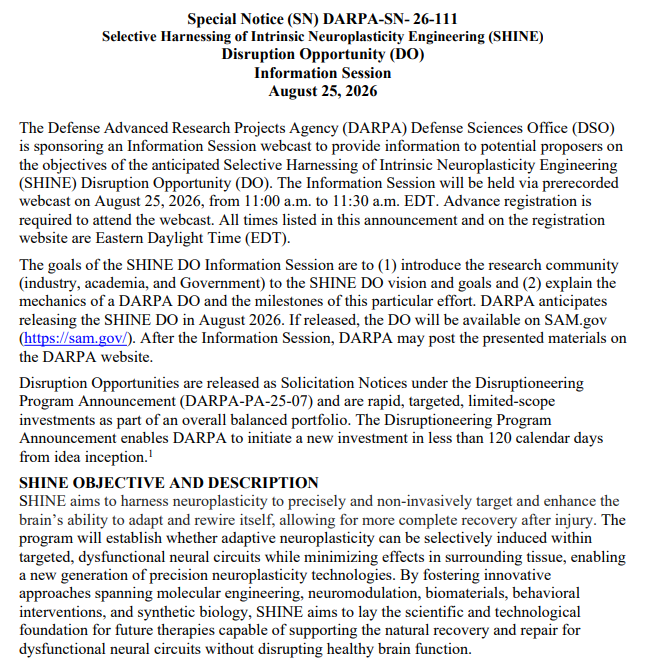
“By fostering innovative approaches spanning molecular engineering, neuromodulation, biomaterials, behavioral interventions, and synthetic biology, SHINE aims to lay the scientific and technological foundation for future therapies capable of supporting the natural recovery and repair for dysfunctional neural circuits without disrupting healthy brain function”
DARPA, SHINE, August 2026
Psychedelic compounds, such as the mushroom-derived psilocybin, are known to aid in neuroplasticity and neurogenesis, and in 2019, DARPA launched its Phocus Pharma program aimed at developing completely new psychotherapeutic drugs to remedy post-traumatic stress, depression, anxiety, and substance abuse.
DARPA looked into Schedule I drugs but concluded that soldiers having full-blown hallucinations would not be the desired outcome, stating:
“Because such drugs act on many neurotransmitter receptors and receptor subtypes in the brain without specificity and indiscriminately activate numerous signaling pathways, they produce significant side effects, including hallucination.
“These effects, coupled with their unpredictable consequences, render the drugs unusable in a military healthcare setting.”
However, research published this year in Creative Science shows a pathway towards the production of biosynthetic psilocybin for commercial manufacturing to treat many disorders while suggesting that “long-lasting therapeutic effects might be dissociated from consciousness-altering actions.”
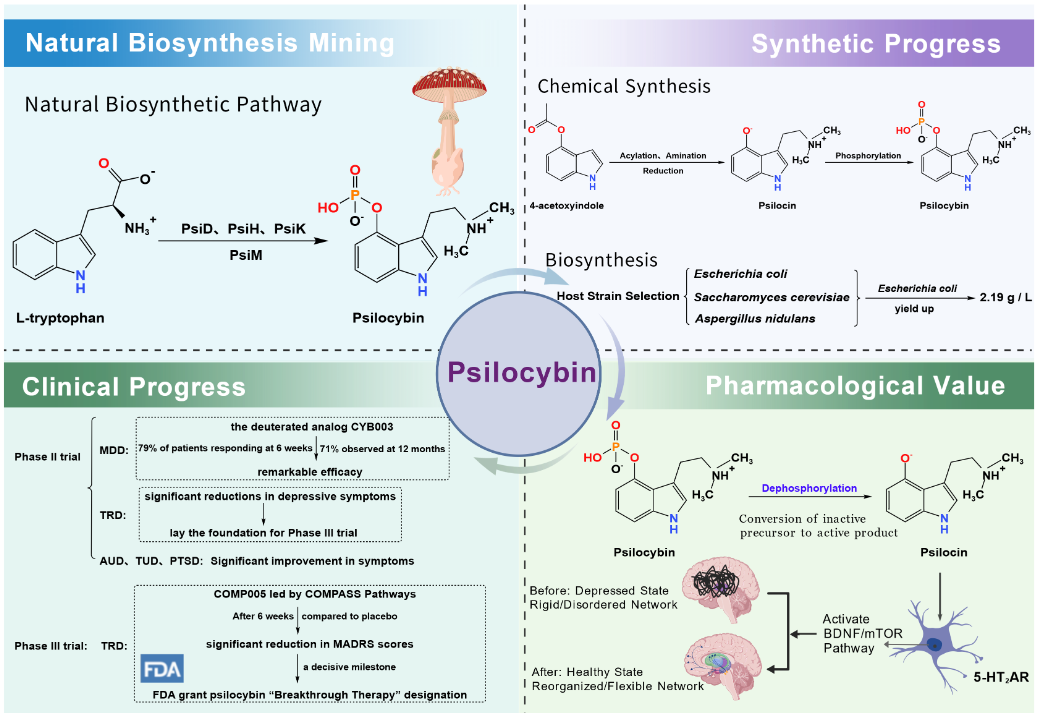
Synthetic biology is just one technological area that DARPA’s SHINE program is looking to explore.
Another has to do with neuromodulation, which changes the way the nerves carry information to and from the brain.
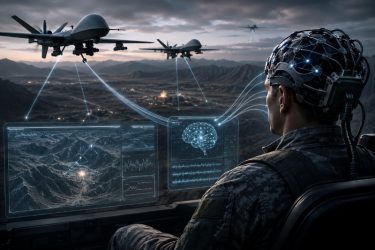
The technologies may include non-invasive brain computer interfaces that can control neural activity through sound, light, or magnetic fields.
For one example, DARPA’s Alert WARfighter Enablement (AWARE) program from 2024 looks to shine near-infrared light into people’s brains.
If successful, it would be able to activate and deactivate drugs in their bodies on demand, like an on-and-off switch.
As for SHINE, if it develops into a fully funded research program, it will look “to lay the scientific and technological foundation for future therapies capable of supporting the natural recovery and repair for dysfunctional neural circuits without disrupting healthy brain function.”
The main point of contact for SHINE is Lieutenant Commander Robin Bonomi, a doctor in US Navy Medical Corp, who just joined DARPA this year in January.
In addition to SHINE, she is now in charge of two other DARPA programs:
- Strengthening Resilient Emotions and Nimble Cognition through Engineering Neuroplasticity (STRENGTHEN)
- to modulate and optimize brain circuits that are responsible for regulating emotions and cognitive flexibility.
- Protein ENGineering (PENG)
- to treat protein editing as dynamic molecular software to explore and validate advanced methods for modifying existing proteins within a biological system.
Dr. Bonomi’s work integrates translational neuroimaging, clinical psychiatry, and advanced analytics for psychiatric outcomes in civilian and active-duty military populations.
For decades, DARPA has been attempting to hack the human nervous system to enhance the capabilities of US warfighters, so that they heal faster, think sharper, and perform better than any other human in the most extreme environments and situations imaginable.
Image Source: AI generated with GROK