



As the space industry continues to expand, driving technological progress, economic growth and strategic advances, the next great leap is not just about access to orbit, but rather about what happens once we’re there.
According to Deloitte, the space industry is set to be valued at over $800 billion USD by 2027, as more objects are launched into orbit each year.
Houston-based startup Starlab Space announced on February 18 that, in response to the surge in opportunities and increasing need for lower Earth orbit (LEO) research and development, it has partnered with Helogen Corporation, the automation platform industrializing orbit by enabling scalable, regulatory-grade manufacturing and autonomous biological operations in space.
Both firms seek to expand how life sciences research is conducted in microgravity, moving from isolated experiments to persistent and scalable discoveries in orbit. These research conditions allow for the improvement of protein crystallization to support drug development, 3D cell growth, disease models that more accurately mimic human biology, and advanced stem cell research with potential applications for treating Parkinson’s, diabetes and Alzheimer’s.
“This partnership reflects exactly how we envision life sciences operating in low Earth orbit,” noted Marshall Smith, CEO of Starlab.
“By integrating autonomous biological systems like HEL-IOS into Starlab, we’re enabling researchers to move beyond short-duration experiments and toward sustained discovery and manufacturing workflows that can deliver real impact on Earth.”
As signaled by the International Space Station (ISS), spaceflight is currently advancing research in pharmaceutical, disease modeling, regenerative medicine, and crop science, among others. Already, the ISS conducts cell culture experiments to better explore how the human body responds to new drugs, for example.
Other promising research projects include studying fundamental plant biology, how epigenetic changes influence the differentiation of a stem cell, and the nuanced complexities of biomedical devices that include fluids–from infusion pumps and dialysis machines to glucose monitors and wearable sensors.
In Helogen integrating HEL-IOS, the world’s first orbital biomedical operating system, into the Starlab ecosystem, the companies will be able to perform fully-autonomous regulatory grade manufacturing of biomaterials via biological cultivation, processing, sequencing, and in-line analytics.
Commercial partners, then, can scale industrial output with fewer flights and reduced operational overhead, while researchers gain ongoing and automated workflows that accelerate their work–without a dependence on crew-tended operations or frequent sample return.
“Microgravity is not just a research environment. It’s a fundamentally new manufacturing and discovery regime. Our mission is to unlock biological processes that Earth’s gravity suppresses and translate them into scalable breakthroughs in medicine and materials,” said Shishir Bankapur, CEO of Helogen.
“Starlab’s globally accessible orbital platform, combined with HEL-IOS, allows researchers to run, iterate and scale biology in space faster than ever before, shifting from one-off experiments to continuous, high-throughput discovery.”
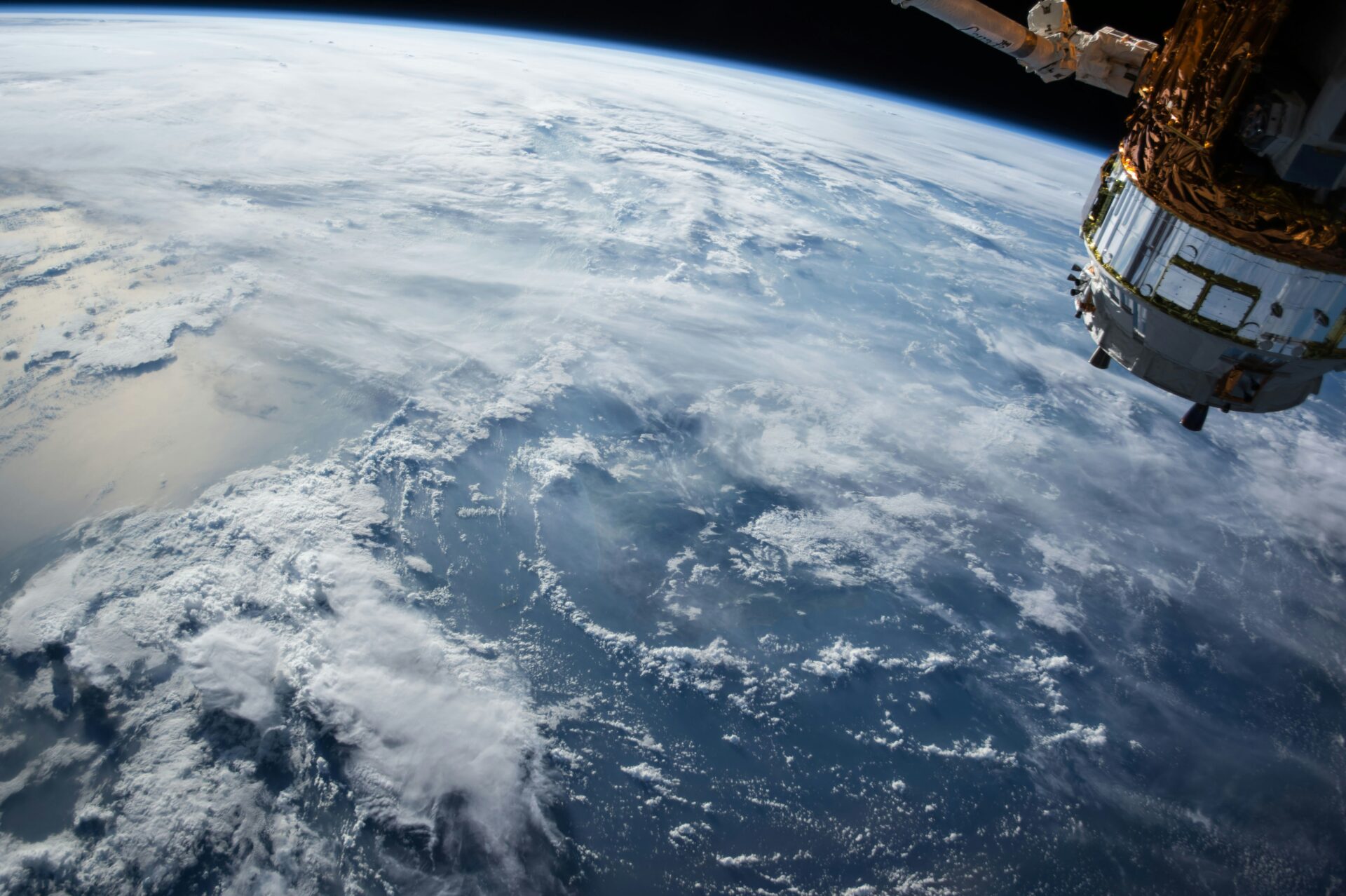
Featured image: NASA via Unsplash+

Disclosure: This article mentions clients of an Espacio portfolio company.