


The UN compliance portal is about making sure govts work with the private sector to get the digital gulags up-and-running: perspective
The United Nations launches the “Digital Cooperation Portal” to track and facilitate public-private compliance with the Global Digital Compact.
Launched on December 4, the Digital Cooperation Portal “aggregates cooperation initiatives globally, on issues related to inclusive digital economies, artificial intelligence (AI) governance, digital infrastructure and the protection of human rights online.”
“It allows partners to align activities for greater impact and coordinate effectively within globally agreed frameworks, such as the Pact for the Future, the Sustainable Development Goals, and the World Summit on the Information Society.”
The UN portal gives “fresh impetus to implementing the ‘Global Digital Compact,’” which is an annex to the “Pact for the Future” that was adopted by 193 member states at the Summit of the Future in September, 2024.
“The portal will collect information on initiatives relative to GDC [Global Digital Compact] objectives from across the UN system and other relevant stakeholders.
United Nations, Digital Cooperation Portal, December 2025
“Data points can be volunteered to the portal by all interested actors on their actions starting from September 2024 until the time of the high-level review of GDC (2027), allowing for a general tracking of progress”
Key features of the portal include:
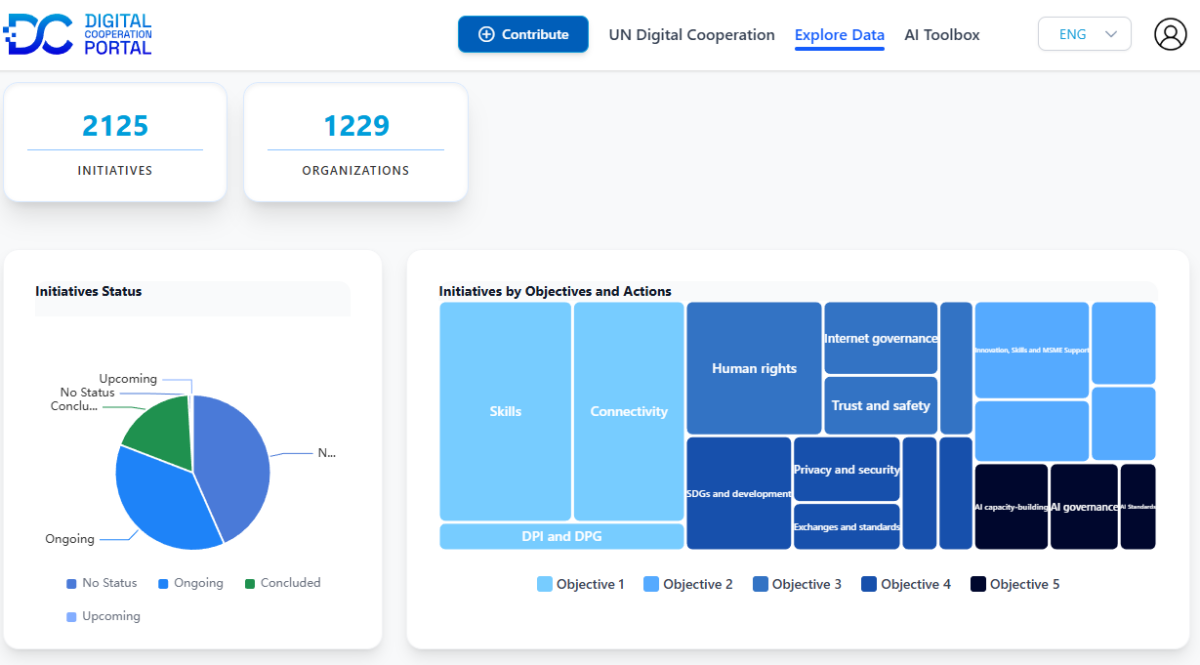
- A catalogue of initiatives contributing to the Global Digital Compact
- Using AI to connect related activities while identifying ways to collaborate
- Tracking developments across countries, institutions, and thematic priorities
The Global Digital Compact has five objectives — all of which lead to digital identity and mass censorship for the coming control grid.
Those five objectives are:
- Closing digital divides
- Expanding inclusion in the digital economy
- Fostering safe digital spaces and human rights
- International data governance
- Enhancing AI governance
While the five objectives may appear benevolent in their rhetoric, if you scratch beneath the surface, they take on whole different meanings:
Closing digital divides means getting everybody connected to the internet.
Expanding inclusion in the digital economy means everybody must have a digital identity to participate in the digital economy.
Fostering safe digital spaces means mass censorship and narrative control through crackdowns on so-called misinformation, disinformation, and hate speech. The UN calls this information integrity.
International data governance means the end of national sovereignty and the rise of unelected bureaucracies dictating how your data should be used.
Enhancing AI governance means deploying technocracy to monitor and police all the other goals for compliance.
Already on its way to being implemented in many countries, the Global Digital Compact gives public and private entities the power to end online anonymity, to program and monitor all financial transactions, and to censor, demonetize, de-bank, and de-platform anyone who doesn’t comply.
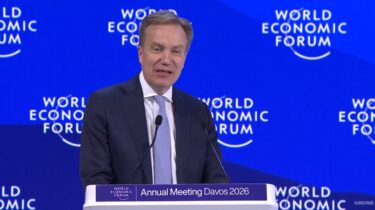
As Australia, the UK, and the European Union pass legislation via their Online Safety and Digital Services Acts, internet passports are becoming the norm — just as Spanish Prime Minister Pedro Sanchez proposed at this year’s World Economic Forum (WEF) Annual Meeting in Davos, Switzerland.
“I propose putting an end to anonymity on social media […] We must […] force all these platforms to link every user account to a European digital identity wallet”
Spanish PM Pedro Sanchez, WEF Annual Meeting, January 2025
What PM Sanchez described is exactly what the Global Digital Compact champions; the same goes for the European Democracy Shield, which seeks to control narratives that the European Commission doesn’t agree with.
By forcing every citizen to have a digital identity, the goal is to incentivize, coerce, or otherwise manipulate all human behavior.
“This is why we urgently need the European Democracy Shield. We need more capacity to monitor and detect information manipulation and disinformation. So we will set up a new European Center for Democratic Resilience“
Ursula von der Leyen, State of the European Union, September 2025
Every unelected globalist-aligned organization denounces so-called disinformation, misinformation, and hate speech for representing an existential threat “our democracy,” and yet they almost never give a single example of what they are actually talking about.
This is what the “fostering safe digital spaces” bit is all about.
“We own the science, and we think that the world should know it, and the platforms themselves also do“
Melissa Fleming, WEF Sustainable Impact Meetings, September 2022
“We partnered with Google […] if you Google ‘climate change,’ you will, at the top of your search, you will get all kinds of UN resources”
Melissa Fleming, WEF Sustainable Impact Meetings, September 2022
UN Under-Secretary-General for Global Communications infamously declared, “We own the science and the world should know it, and the platforms themselves also do,” in a discussion on disinformation at the WEF Sustainable Development Impact Meetings in September, 2022.
There, she admitted that the UN partnered with Google to manipulate search results on climate change, so that only UN-approved sources appeared at the top.
The UN has also declared that any information that could impede progress on the Sustainable Development Goals, aka “Agenda 2030,” must be stamped out.
The Global Digital Compact “calls for an assessment of the impact on mis — and disinformation on the Sustainable Development Goals”
Melissa Fleming, G20 Leaders Summit, November 2024
“The portal uses AI-enabled tools to map related activities and identify opportunities for collaboration. It also tracks progress and developments in real time”
United Nations, Digital Cooperation Portal, December 2025
By introducing the Digital Cooperation Portal, the United Nations is attempting to hold public and private entities accountable to the Global Digital Compact.
Of the 2,125 initiatives highlighted in the cooperation portal, or better said, compliance portal, one is the 50-in-5 campaign, which was launched in November, 2023.
Funded by the Gates Foundation in partnership with the UN and others, the 50-in-5 campaign aims to implement at least component of Digital Public Infrastructure (DPI) in 50 countries within five years.
“By 2028, more than 500 million more people will have a digital identity that allows them to access employment and education opportunities more easily, as well as financial services, healthcare, and government programs”
Melinda French Gates, 50-in-5 Campaign, November 2023
DPI is a civic technology stack consisting of three main components: digital identity, fast payment systems, and massive data sharing between public and private entities.
In October, 2025, the 50-in-5 campaign reached a milestone of 30 countries.
DPI is the technological foundation at the heart of the Global Digital Compact.
Without digital ID, programmable currencies, and data sharing everything falls apart.
“We commit, by 2030, to encourage the formation of partnerships that bring together Governments, the private sector, civil society, technical and academic communities and international and regional organizations to design, launch and support initiatives that leverage digital public goods and digital public infrastructure to advance solutions for the Sustainable Development Goals”
United Nations, Global Digital Compact, September 2024
Once DPI is fully operational on a global scale, it opens the door to total surveillance and control.
Vaccine passports, travel restrictions, limited meat consumption, carbon footprint trackers, online censorship, programmable currencies, school enrollment, employment eligibility, access to government subsidies, and so much more can all be facilitated via DPI thanks to the Global Digital Compact and the newly launched compliance portal.
You don’t have to use your imagination to know this — proponents brag about what they would do with this power all the time.
“We consider such digital public goods and digital public infrastructure to be key drivers of inclusive digital transformation and innovation.
United Nations, Global Digital Compact, September 2024
“We recognize the need to increase investment in their successful development with the participation of all stakeholders”
The Global Digital Compact is all about connecting everyone to the internet, so that everyone has a digital identity, so that everybody is monitored and controlled for compliance.
The newly-launched Digital Cooperation Portal is all about making sure that governments work with the private sector to get these digital gulags up-and-running.
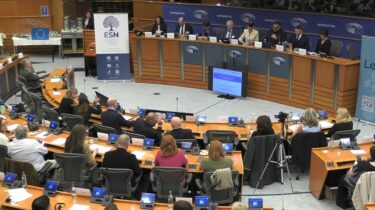
Image source: Screenshot from UN YouTube video: “UN launches new portal for digital cooperation”